
Ōrewa College

Dirt to dinner: Freshening up food tech
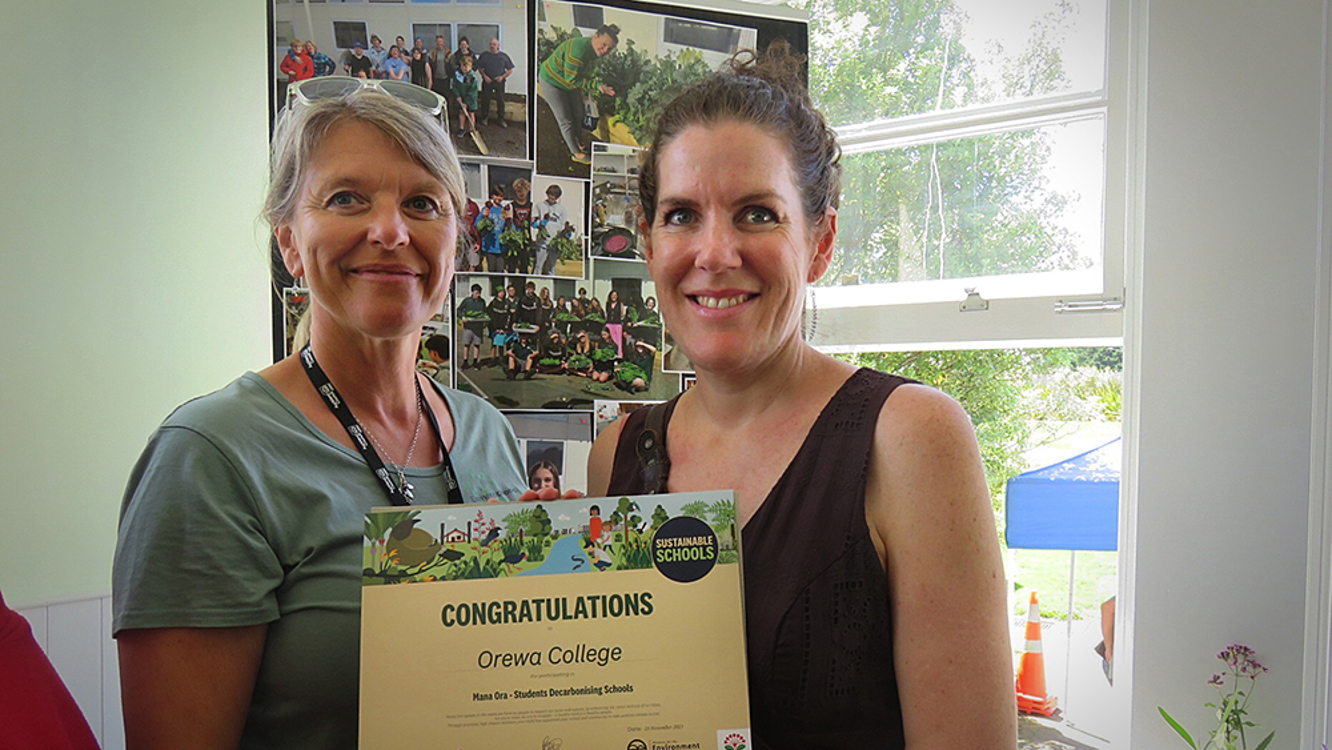
For Ōrewa College, the Mana Ora programme offered an opportunity to invest in infrastructure for onsite food production and curricular innovation. Year 9 Soft Technology teacher, Kate Newman, headed up the project, and has laid the foundations for a food tech and hospitality curriculum that engages students in the cycle of food production and builds their understanding of food waste and food miles.
Kate had noticed that the college’s existing herb gardens were underutilised. Although students were harvesting herbs when encouraged, they had nothing to do with the growing process. A novice gardener herself, Kate decided to bring students along with her on a journey to expand the school’s capacity to grow food and lessen her department’s reliance on purchased ingredients.
The first phase involved planning out all the materials needed to build raised beds, deciding on a suitable location, obtaining quotes from hardware stores, and applying for a grant from the Mana Ora Climate Action Fund. The student envirogroup was pivotal in this and did a thorough job articulating the project’s objectives and draft budget, as well as the links to student wellbeing and decarbonisation.
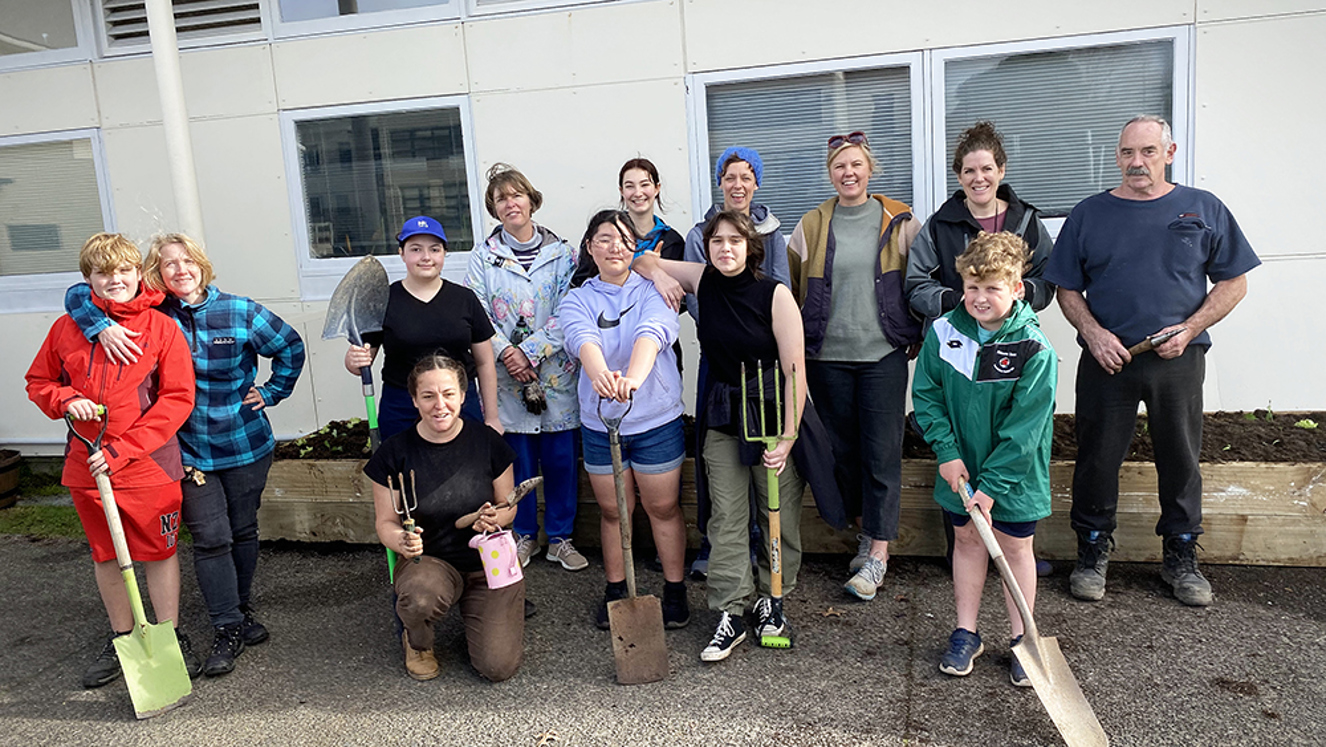
With a grant secured, phase two involved the purchasing of materials and seedlings and a mid-winter working bee in the school holidays. Over 20 volunteers – including students, staff, parents and local experts from Ōrewa Community Garden – took part in constructing the beds, layering compost and planting beetroot, broccoli, celery, rhubarb, spinach and silverbeet.
“The beds had to be close to the food tech classroom so we could monitor it and easily get students involved. The area also has a lot of foot traffic, so we thought it would be an opportunity to beautify the school and inspire the community” Kate Newman
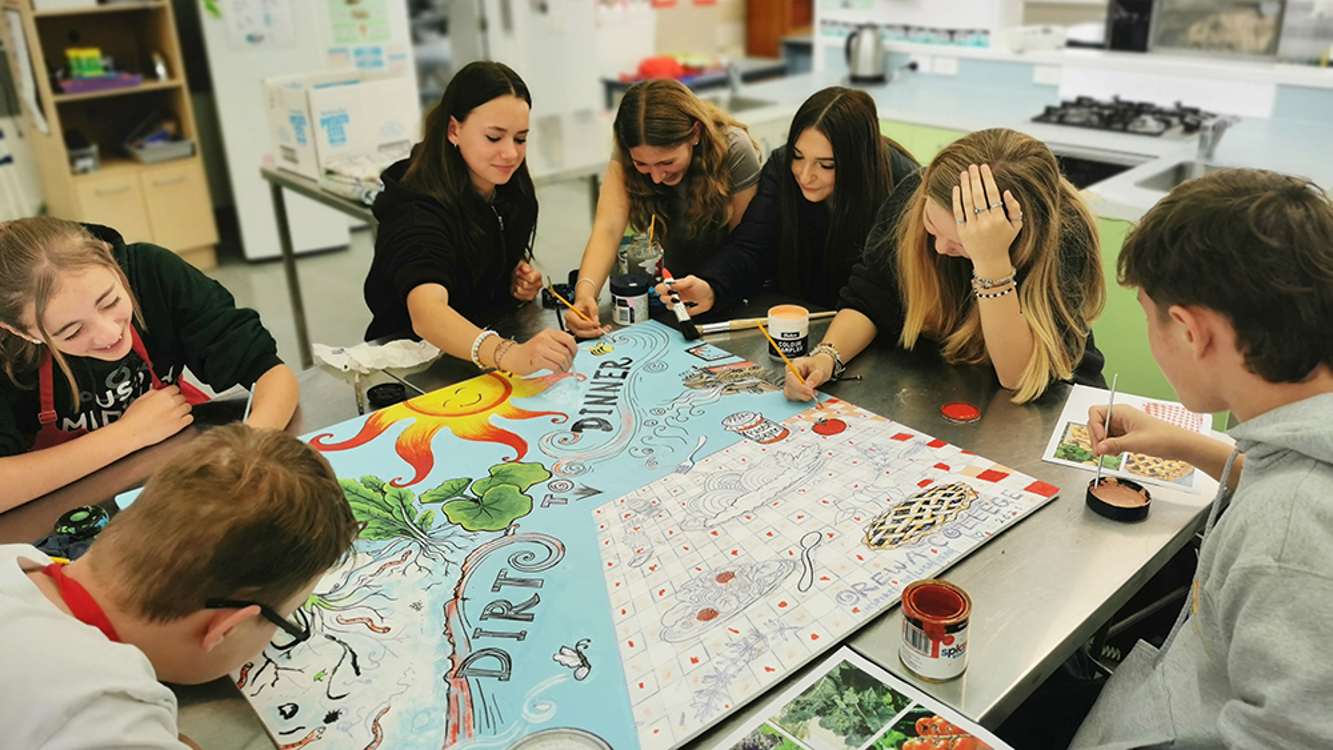
Art supplies were also factored into the budget and Kate invited teacher aide and graphic designer Nonavee Dale to design a mural to communicate the journey from “Dirt to Dinner”. Kate’s Year 9 class completed the mural painting in Term 3 and it now sits above the raised beds.
Since the garden’s establishment, it has been a thrill for Kate to observe teenagers getting excited about tending to the beds and harvesting fresh produce to use in class.
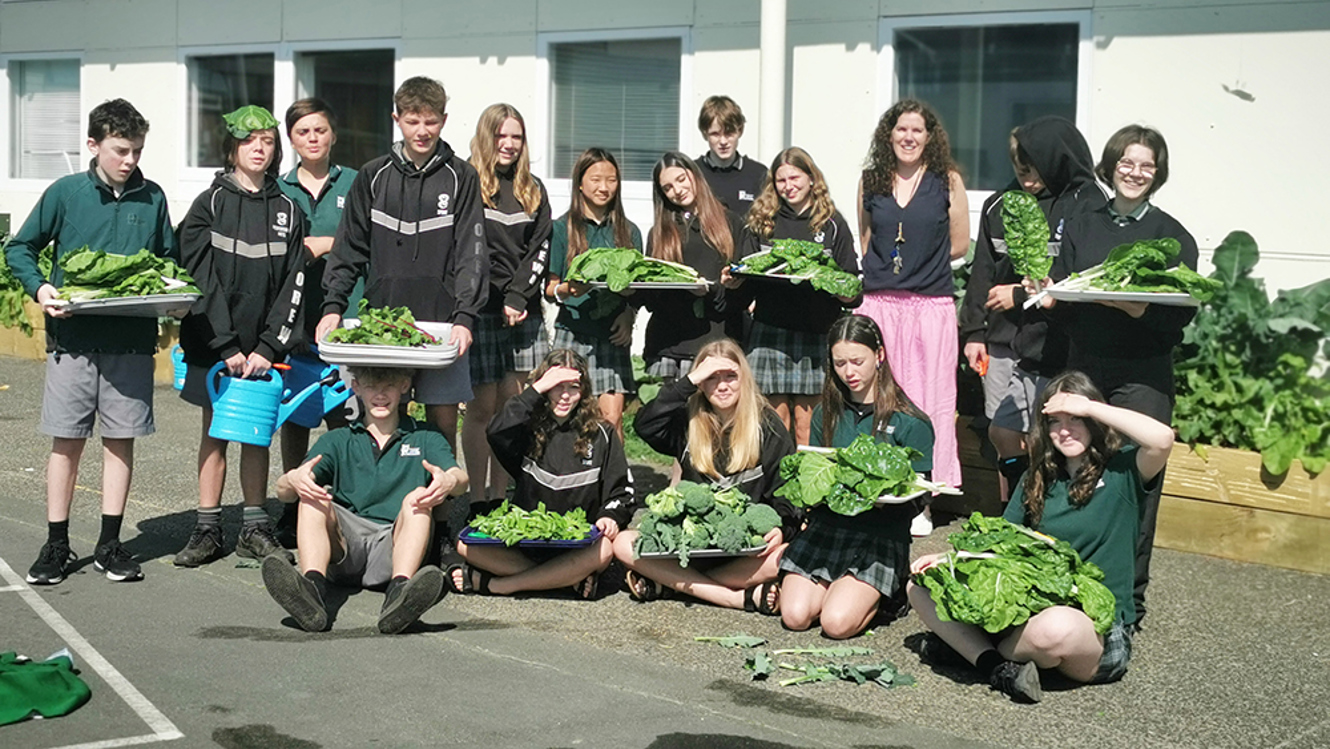
“They’ve loved the hands-on aspect, loved the doing rather than just the theory. So we garden once a week, cook once a week and do one session on theory. We’re also in tune with the garden – so if the beetroot needs to come out, we’ll use beetroot that day.” Kate Newman
Kate has also been thoughtful about choosing recipes that are appealing to teenagers and teaching them useful cooking skills.
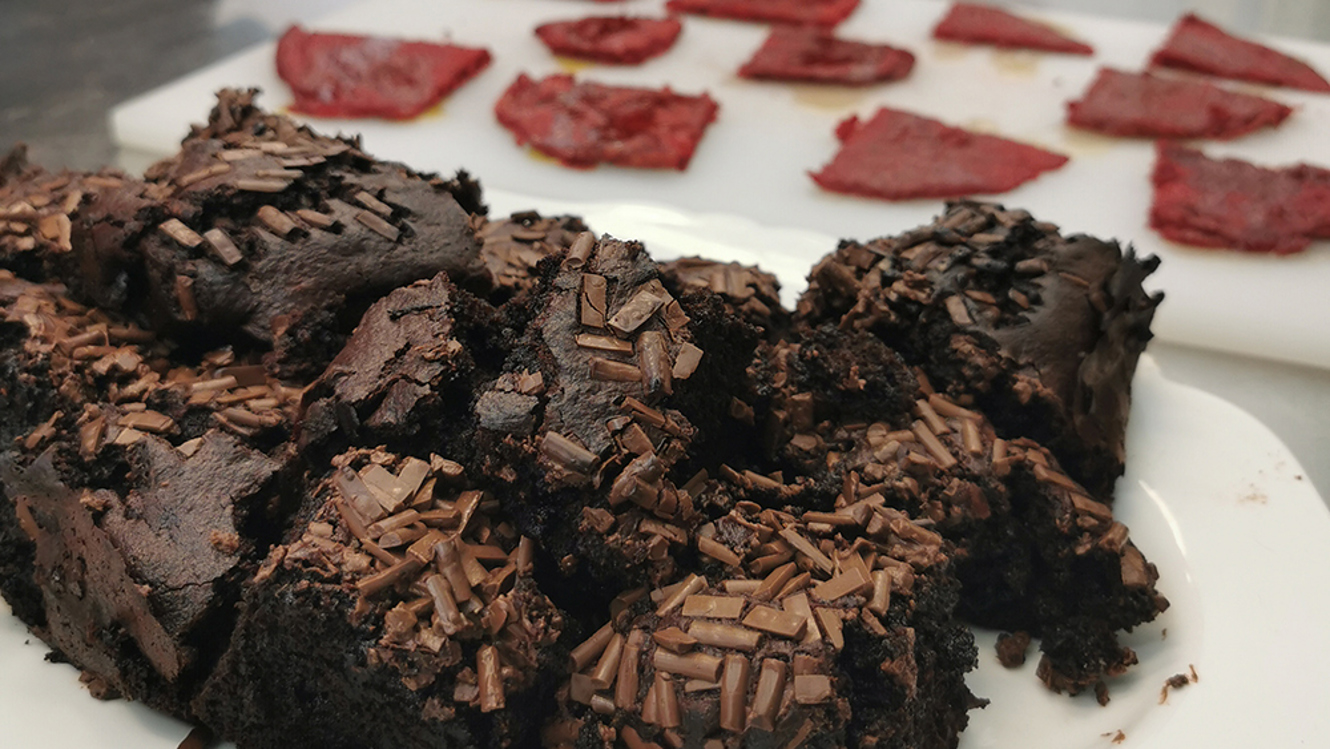
“We started with baking and meatier recipes. So we made beetroot brownies and pancakes, and we snuck the leafy greens into sausage rolls and cream cheese pastry puffs. I also taught the students to clean, chop and freeze the greens to use at a later date, as a commercial kitchen would do.”
Term four brought a new season of planting, with basil, blueberry bushes, capsicums, tomatoes, pumpkins and zucchini selected this time. Kate’s Year 9 class also decided to grow their own pea, corn and watermelon plants from seed.
In future, Kate hopes to build more raised beds and to ensure even more students are able to get involved in planting. She has also arranged for Nonavee to design a calendar to show when different species are best planted and harvested and how the timing aligns with the school terms. Her vision is for students to use the calendar to design seasonal, colourful, plant-based recipes and to monitor the garden so they can harvest produce at peak freshness and maturity.
Kate has noticed a shift in student engagement over the course of the year, and puts this down to the hands-on pedagogy and students getting to have a say in their learning.
“If you invite them to come on board, and find out their thoughts in terms of things that affect the school, they feel really honoured. They start to realise how much impact they can have on the school if they want to.” Kate Newman
She is also looking at developing a leadership programme for junior students who are particularly enthused by gardening and could share their passions with others.
Did you know? Buying locally produced food and in-season vegetables can save around 120kg of carbon dioxide emissions over a year, due to reduced food miles. Learn more.
You May Also Like

From grass bank to food forest at Pasadena Intermediate

Climate action in Vagahau Niue

Manurewa’s next generation of kai growers

More Aucklanders learn to ride with local board support

Rangatahi take the stage
