
Onehunga Primary School

Communicating environmental footprints through collaborative art
Onehunga Primary School is a Green-Gold Enviroschool with a long history of sustainability action and student empowerment.
In March 2023, teacher Jackie Arthur took three keen students to the Mana Ora launch where they connected with other schools and formulated ideas for new projects. On return to school, the students formed a Mana Ora team within their wider envirogroup, and further developed their most promising idea. Inspired by an art project presented at the launch, the team envisioned a series of educational murals, co-created with the whole school community.
Student body engagement was built into the project’s design, with a special enviro assembly held in Term 2 for pitching the idea, in the format of a news show about the carbon cycle and global warming. The whole school was invited to think about how carbon footprints could be communicated through visual imagery, with different themes assigned to different learning communities. Year 0/1 classes were invited to contribute ideas about waste, Year 2 were assigned grow, Year 3/4 looked at energy, and Year 5/6 food. In the final mural, the Mana Ora team tackled transport.
Students submitted their ideas to teachers who passed them on to Jackie and the team. After considering all the amazing images that were submitted, the Mana Ora team worked with teacher and artist Amy Graham to conceptualise each mural.
“We took a lot of students’ ideas and put them into the design. Pīwakawaka students used a lot of footprints and so we used that in the food mural.” Lulu, Year 5
Amy sketched and painted outlines onto the boards, ready for students to make their mark. Painting was completed over the course of Term 3, with eight students from each learning community selected to contribute.
On a sunny Friday afternoon prior to Labour weekend, the murals were launched in a full school outdoor assembly. The ceremony featured ribbon cutting, a Niuean dance performance, and a tour of the courtyard where the murals were installed. Local media were present, and the Mana Ora group recounted the story of how the murals came about, and acknowledged the widespread participation of students.
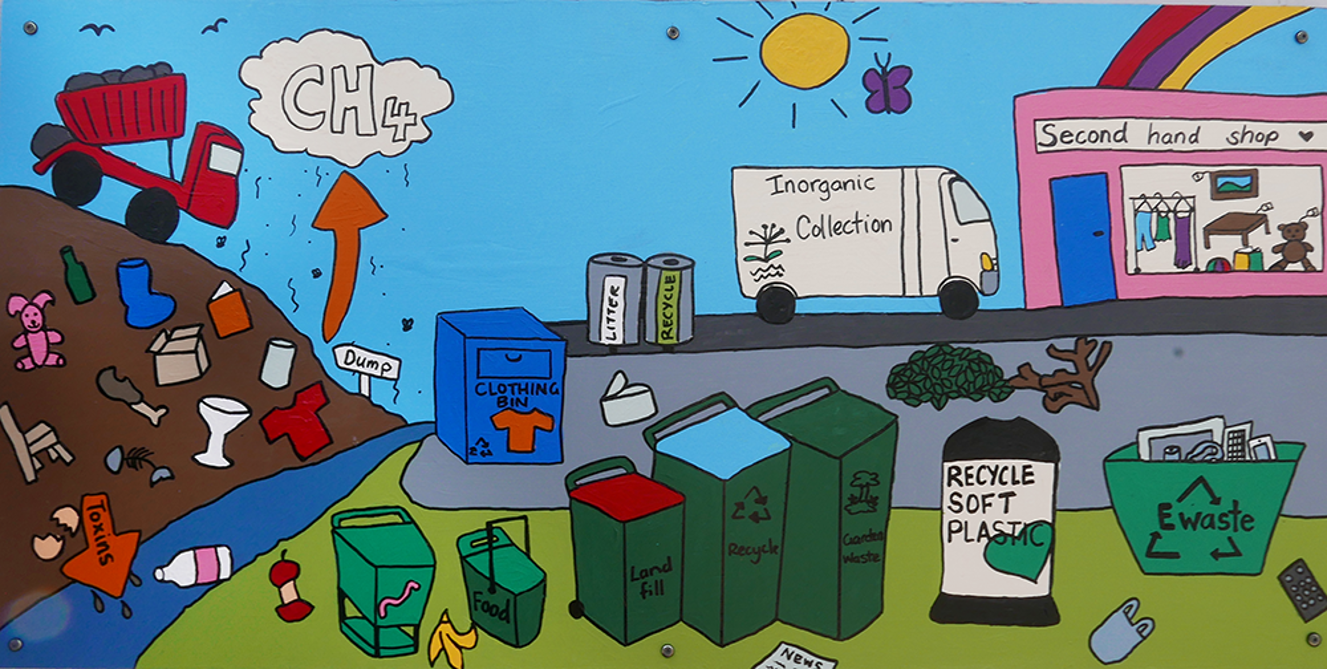
The Year 0/1 mural focuses on diverting waste to landfill and keeping things in circulation via composting, recycling, inorganics collection and shopping second hand. Note the methane gas (CH4) emitting from the landfill.
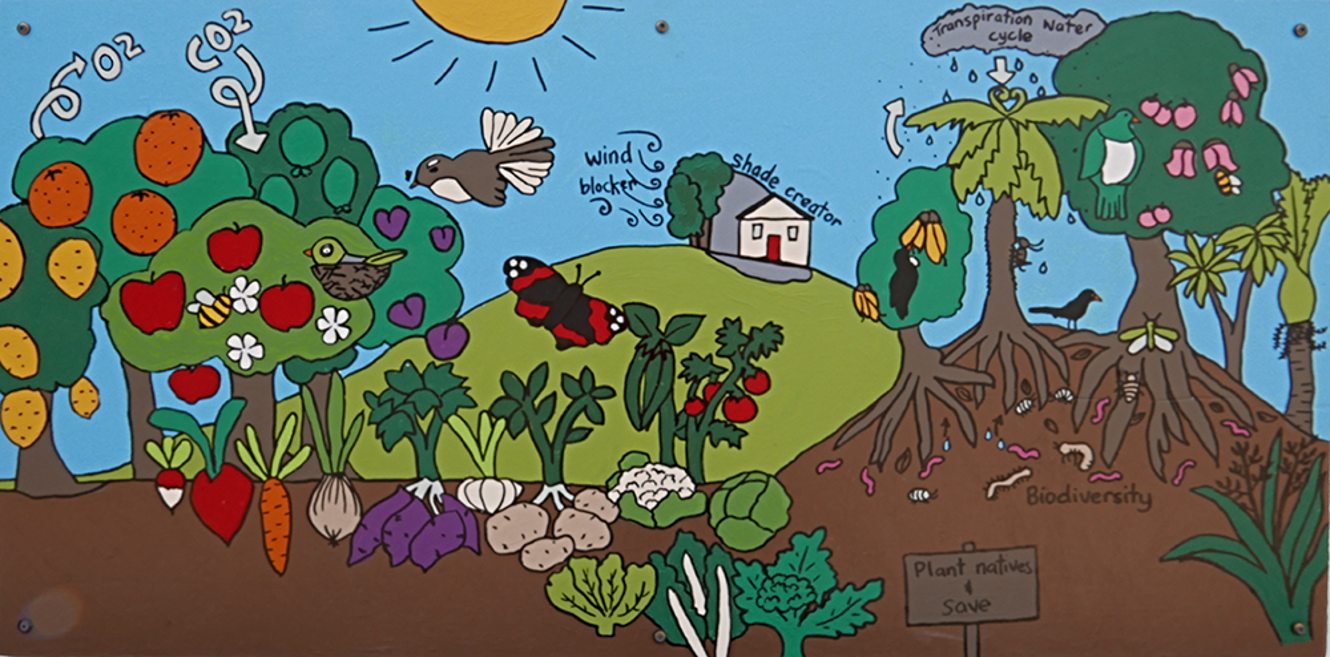
The Year 2 mural focuses on growing food, the interactions of native flora and fauna, and the roles of trees in creating shade and blocking wind. Note the oxygen (O2) and carbon dioxide (CO2) exchange through respiration, and the transpiration of water through the trees.
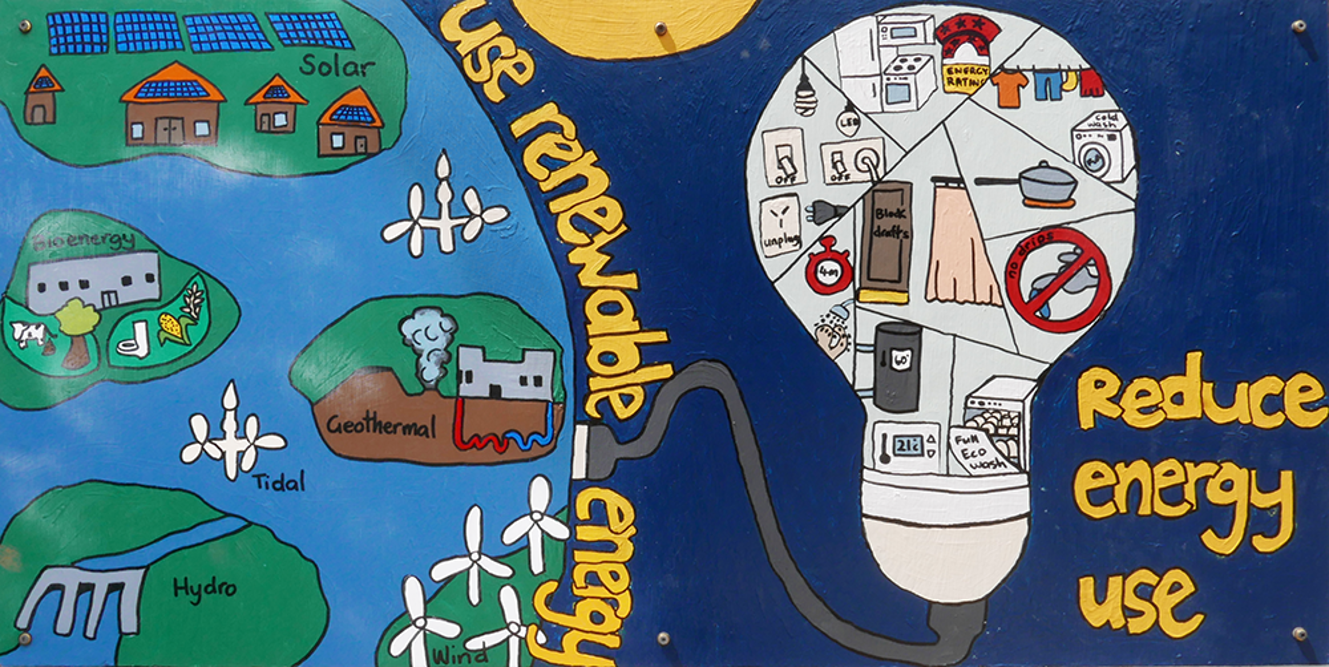
The Year 3/4 mural focuses on energy, with a lightbulb plugged into more sustainable energy sources – solar, wind, hydro, tidal, geothermal and bioenergy. Reducing energy is conveyed by unplugging and turning off lights, using efficient products and eco-modes, checking thermostats, blocking draughts, and more.
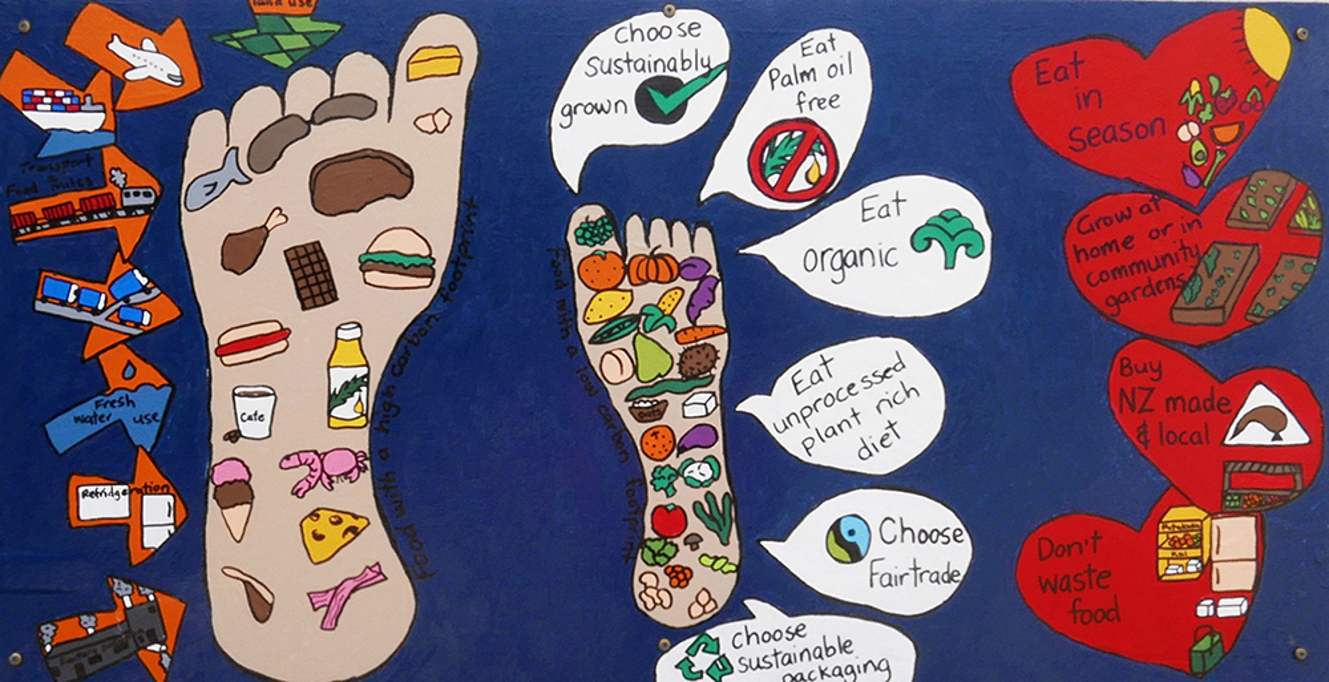
The Year 5/6 mural focuses on food systems, and conveys carbon-intensive food in the larger footprint and lower carbon options on the smaller footprint. Note the processes involved in food production, storage and distribution (arrows), key principles involved in more ethical food production and consumption (bubbles), and other tips for reducing food miles and food waste (hearts).
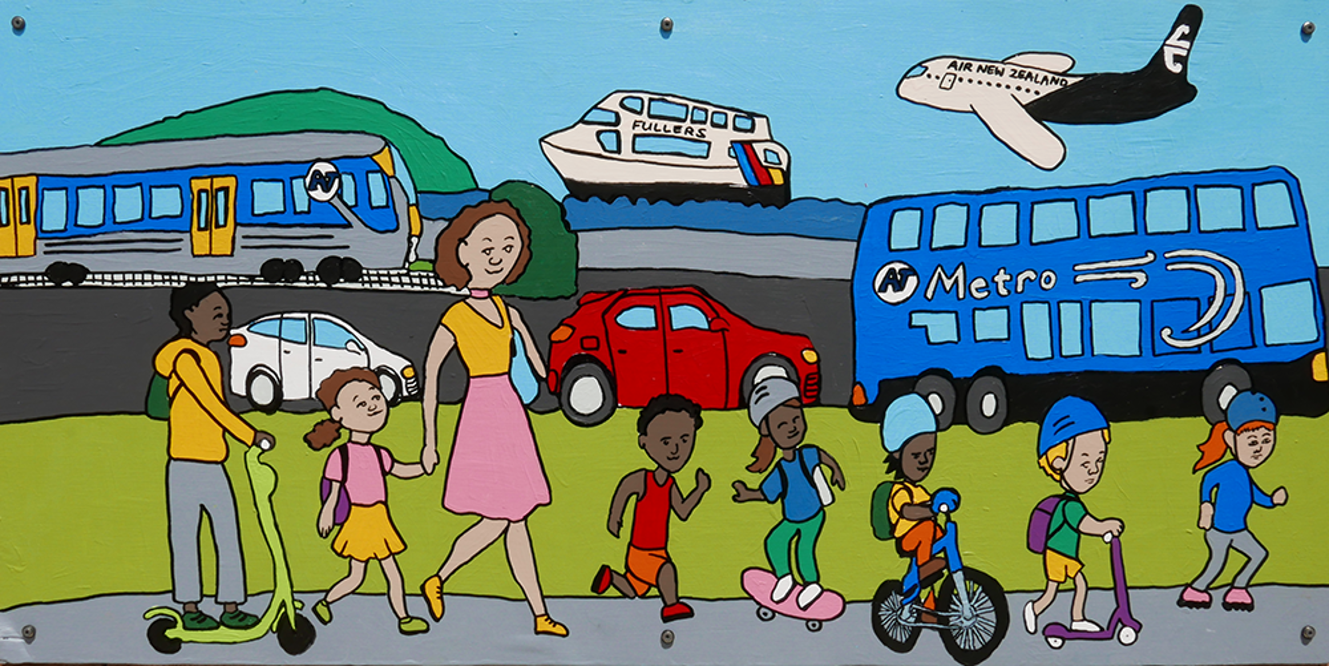
The Mana Ora team’s mural focuses on transport choices. In the foreground, sustainable modes for the school commute are visible on a footpath. The background has various layers of private and public transport options with varying levels of carbon intensity.
For the team leading the project, there were many lessons learned. For Sophie, a Year 6 student, the project taught her “a lot about the carbon footprint”. Alex, a Year 5, reflected on the value of the arts in engaging a wider spectrum of people in the school.
“I think it was different to our other projects because it took longer and not just the enviro people were involved, and people had to put a lot of effort into it”. Alex, Year 5
The team also learnt – the hard way – about the importance of taking care with painting products, after a sealant stained one of the murals. When asked what advice she would offer other leaders of similar project, Sophie explained “Be careful of sealing products, make sure you test them first!”
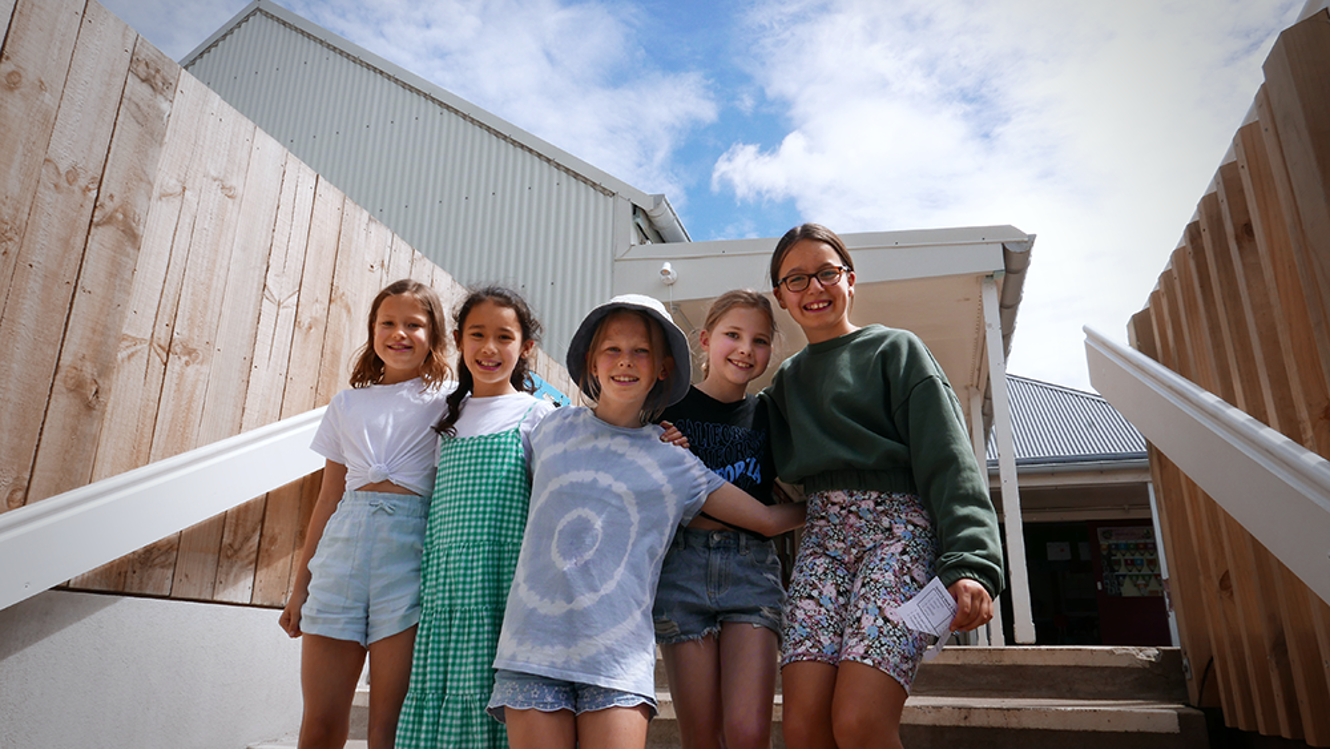
Jackie was delighted with the rich learning opportunities the project presented, as well as the vibrant finished products.
“We hope the murals will be a catalyst for conversation about ways to reduce our carbon footprint, and be a resource for years to come”. Jackie Arthur
The next step is to create resources that can enhance a visit to the courtyard. As Jackie explains, “Teachers may take students for a walk with a blurb about each mural to prompt discussion. Older kids may get more out of it than younger, but everyone can go and look at the murals and improve their knowledge”.
You May Also Like

Opening new doors

Rānui and Henderson 2023 storm recovery

Travel choices driving Auckland's climate progress

25 years of CCET

Auckland's 2026 Zero Waste Awards Winners Announced
