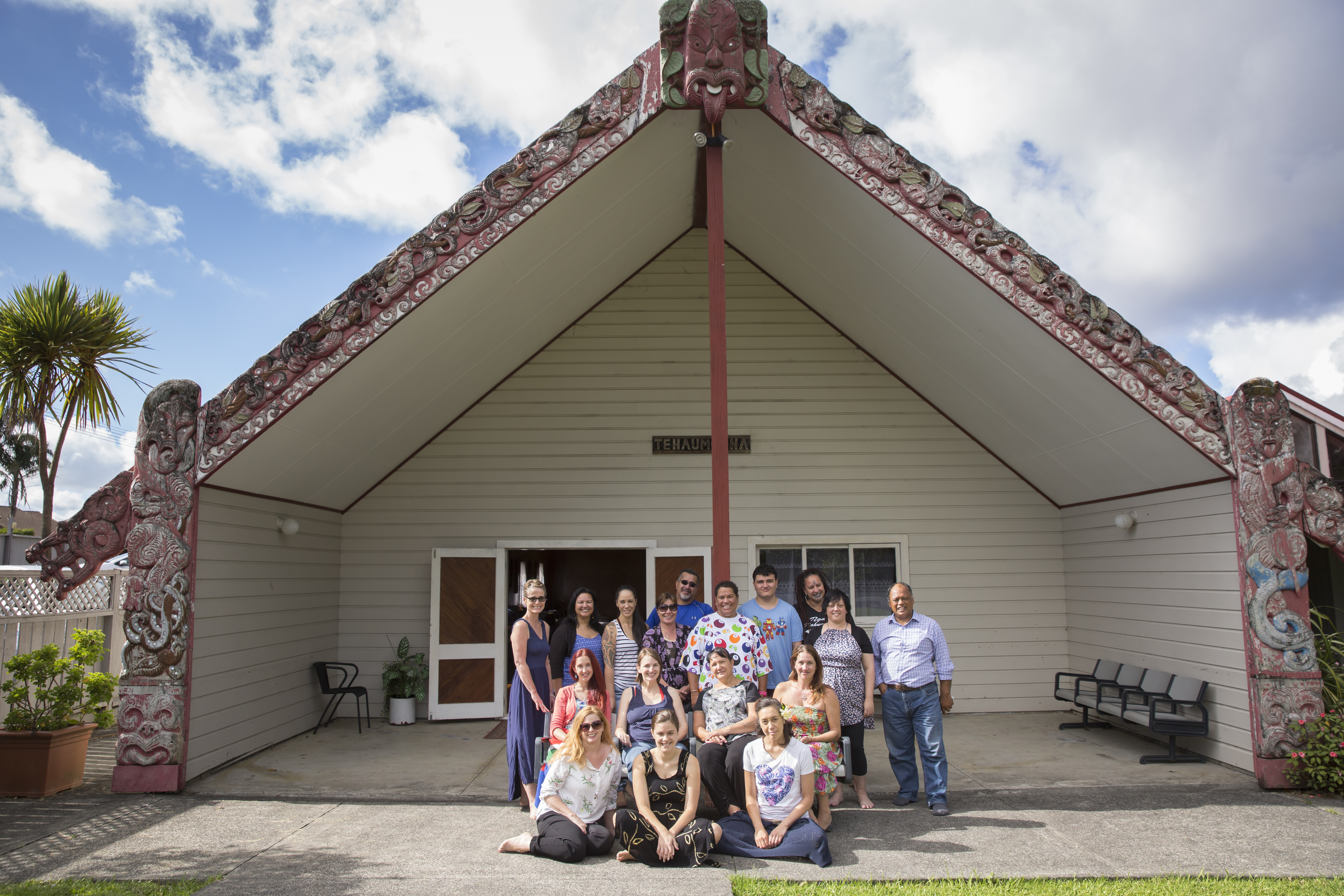
Your Rohe Resilient Marae

Marae resilience

Marae are the manawa taki, of Tāmaki Makaurau, connecting whānau, hapū and iwi to each other, to tūrangawaewae and to te taiao.

Marae are living centres of te reo Māori, tikanga and mātauranga, guiding how communities care for Papatūānuku mā and for the whakapapa connections between nature, people and place.

From environmental stewardship to critical disaster response, from hosting important hui to health, education and leadership initiatives, marae act as cultural, social, educational, environmental and economic anchors for the region. Marae provide both concrete services and the living framework of te ao Māori that sustains Tāmaki Makaurau.

Marae at the Heart of Climate Resilience

Marae are powerful centres of connection, knowledge and leadership. Grounded in whakapapa and local mātauranga, they provide practical, culturally grounded responses that help hapū, iwi and Māori communities prepare for, withstand and recover from climate impacts.

<h3>Why marae matter for climate resilience</h3> image

Why marae matter for climate resilience

He tangata | People-centred places: Marae are networks of relationships – between people, whenua and wai – and these relationships are the foundation of strong local responses when weather, floods or other shocks hit.

Why marae matter for climate resilience

He tangata | People-centred places: Marae are networks of relationships – between people, whenua and wai – and these relationships are the foundation of strong local responses when weather, floods or other shocks hit.

He hāpori | Community hubs

Across Auckland, marae have already supported housing, civil defence and emergency responses - providing shelter, meals, warmth, manaakitanga and other tikanga that help people feel safe and connected. 

He tikanga | Culturally unique solutions

Because every marae is unique to its landscape and community, adaptation responses grounded in local mātauranga offer practical, place-based ways to reduce harm and safeguard taonga into the future.

<h3>Principles for effective marae-led climate adaptation</h3> image

Principles for effective marae-led climate adaptation

Ahikā, kaitiakitanga and rangatiratanga: Those who hold the hearth (mana whenua or ahikā) must be involved in and in control of decisions that affect their whenua and people. That leadership creates solutions that are culturally sound and fit for future generations.

Principles for effective marae-led climate adaptation

Ahikā, kaitiakitanga and rangatiratanga: Those who hold the hearth (mana whenua or ahikā) must be involved in and in control of decisions that affect their whenua and people. That leadership creates solutions that are culturally sound and fit for future generations.

Mātauranga-driven approaches

Local, place-based knowledge must sit alongside scientific information – mātauranga is essential in understanding patterns of risk and in building resilience.

Invest in capability and governance

Resilience is as much about strong governance and planning as it is about buildings. Investing in marae capability, infrastructure and support systems pays dividends in everyday life and in crisis.

<h3>Practical steps hapū, iwi, Māori and marae are taking</h3> image

Practical steps hapū, iwi, Māori and marae are taking

Whānau, hapū, marae and mātāwaka are already engaged in a range of adaptation planning, including:

Practical steps hapū, iwi, Māori and marae are taking

Whānau, hapū, marae and mātāwaka are already engaged in a range of adaptation planning, including:

  • Investing in te reo Māori, mahi toi, rongoā Māori, kapa haka and other cultural revitalisation to strengthen resilience, kotahitanga and mātauranga.
  • Discussing climate change in grounded ways that make sense of tūpuna wisdom and provide direction for future action, such as hīkoi, hākari, wānanga, tohu taiao and māramataka.
  • Mapping risks: whenua, buildings, wāhi tapu, essential infrastructure (power, water, communications) and access routes.
  • Developing adaptation plans that include emergency response roles, supplies and communications, and moves towards possible options for protection or relocation where needed.
  • Strengthening water, power and food resilience (rain harvesting, renewable energy like solar panels, generators, māra kai).
  • Considering low-carbon community solutions like Electric Vehicle-share schemes
  • Uncovering social and economic opportunities while protecting taonga – from skills development to growing local or regional business initiatives.
  • Building partnerships with council, emergency services and local community groups while protecting ahikā decision-making.

Marae resilience in Tāmaki Makaurau

Auckland Council supports marae infrastructure, capability and governance across the region, enabling mana whenua to maintain and develop robust, climate-safe and future-focused marae.

Resilient Marae programme

Resilient Marae is an iwi-designed, Māori-led kaupapa that delivers on Te Puawaitanga o Te Tātai, a priority in Te Tāruke-ā-Tāwhiri: Auckland’s Climate Plan.

Rooted in whakapapa and mātauranga Māori, this kaupapa strengthens taiao resilience by upholding traditional practices, fostering intergenerational knowledge sharing, and supporting marae, whānau, iwi and rangatahi to access tools and technologies that realise their taiao aspirations.

Through kaitiakitanga, innovation and dedicated action, Resilient Marae supports mana whenua and mātāwaka to create systems change and build a thriving future for te taiao and our communities.

 preview image

Rural marae infrastructure resilience

Rural resilience is just as important. Marae and community halls often become gathering points during floods, offering shelter, connection, and support when it is needed most.

Through the Making Space for Water programme, Auckland Council is upgrading stormwater and wastewater systems at key rural sites, working alongside mana whenua and local leaders to respond to each community’s needs.

Partnering with Auckland Transport also helps prioritise improvements to rural roads, which are often the only routes connecting whānau to essential services.

By combining practical upgrades with better data, local insight and strong partnerships, we are taking a coordinated and long-term approach to flood resilience, helping build a safer, more resilient rural Tāmaki Makaurau.

Tools & resources

In these links you can begin to explore practical tools, case studies, games, planning checklists and research on marae infrastructure, adaptation planning for papakāinga, and community-led emergency readiness. Then, when you’re ready, you can bring your whānau or hāpori together to begin planning from the place you know best.


Select subject

Select file type

He Arotakenga Manawaroa preview image

He Arotakenga Manawaroa

A holistic approach for assessing and evaluating resilience within three main interlinked domains or wāhanga.

Website
Hiko Iwi Electric Initiative preview image

Hiko Iwi Electric Initiative

Marae in Auckland are trialling EV share systems; your community could advocate for one.

Website
Kia whakamana i ngā hāpori katoa | Building better communities preview image

Kia whakamana i ngā hāpori katoa | Building better communities

Make dwellings and urban spaces more welcoming, useful and safe.

Website
Our Changing Coast (NZ SeaRise) preview image

Our Changing Coast (NZ SeaRise)

This programme uses Takiwā to map sea-level rise and land movement, helping hapū assess risks to marae and whenua.

Website
Te Ara Urutau – Climate and Emergency Ready Fund preview image

Te Ara Urutau – Climate and Emergency Ready Fund

Supporting community organisations to take meaningful action on climate change and be emergency ready.

Website
Te Kōmata o te Tonga: Deep South Challenge preview image

Te Kōmata o te Tonga: Deep South Challenge

Kaupapa Māori research, tools and case studies supporting marae and Māori communities to adapt to climate change.

Website
Te Puni Kōkiri – Climate hazards for hapori Māori (Auckland region) preview image

Te Puni Kōkiri – Climate hazards for hapori Māori (Auckland region)

This online map lets you zoom in on your marae and click through to see different climate hazards and risk ratings.

Whanake te kura i tawhiti nui preview image

Whanake te kura i tawhiti nui

Case studies and tools demonstrating Māori knowledges and planning to inform and improve resilience across a range of natural hazards.

Website

News & Highlights

Mana whenua and communities to drive recovery plans preview image
OUR AUCKLAND
Te ao Māori 27 Aug 2025

Mana whenua and communities to drive recovery plans

Enabling iwi to exercise kaitiakitanga within their rohe to address the impacts of the severe weather events and to respond to the changing climate.
Uncovering hidden wai: iwi and council unite to understand ancestral waters preview image
OUR AUCKLAND
Te ao Māori 14 Aug 2025

Uncovering hidden wai: iwi and council unite to understand ancestral waters

Beneath the paved streets and bustling footpaths of central Tāmaki Makaurau lie ancient awa that once flowed freely through the rohe of Ngāti Whātua Ōrākei.
The kai resilience movement in Tāmaki Makaurau preview image
OUR AUCKLAND
Climate Action 11 Aug 2025

The kai resilience movement in Tāmaki Makaurau

Supporting locals to plant food forests and grow vegetables, protecting soil and reducing food-related emissions...
Walking together: Council, mana whenua and community deepen conservation relationships online preview image
OUR AUCKLAND
16 May 2025

Walking together: Council, mana whenua and community deepen conservation relationships online

Protecting the environment in Tāmaki Makaurau is deeply cultural, ancestral and collaborative journey
Marae initiatives supported at Auckland Council preview image
COUNCIL NEWS
Te ao Māori 21 Feb 2025

Marae initiatives supported at Auckland Council

Marae are a critical cultural connection hub not only for mana whenua and mataawaka...
Hapū-led partnership launched to protect globally significant ecosystems and endangered species of the Kaipara preview image
OUR AUCKLAND

JOIN OUR NEWSLETTER

Join our newsletter to receive the latest climate action and community news.

This website requires cookies to provide all of its features.

For more information on what data is contained in the cookies, please click the 'Read More' button. To accept cookies from this site, please click the 'I Agree' button.

Read More