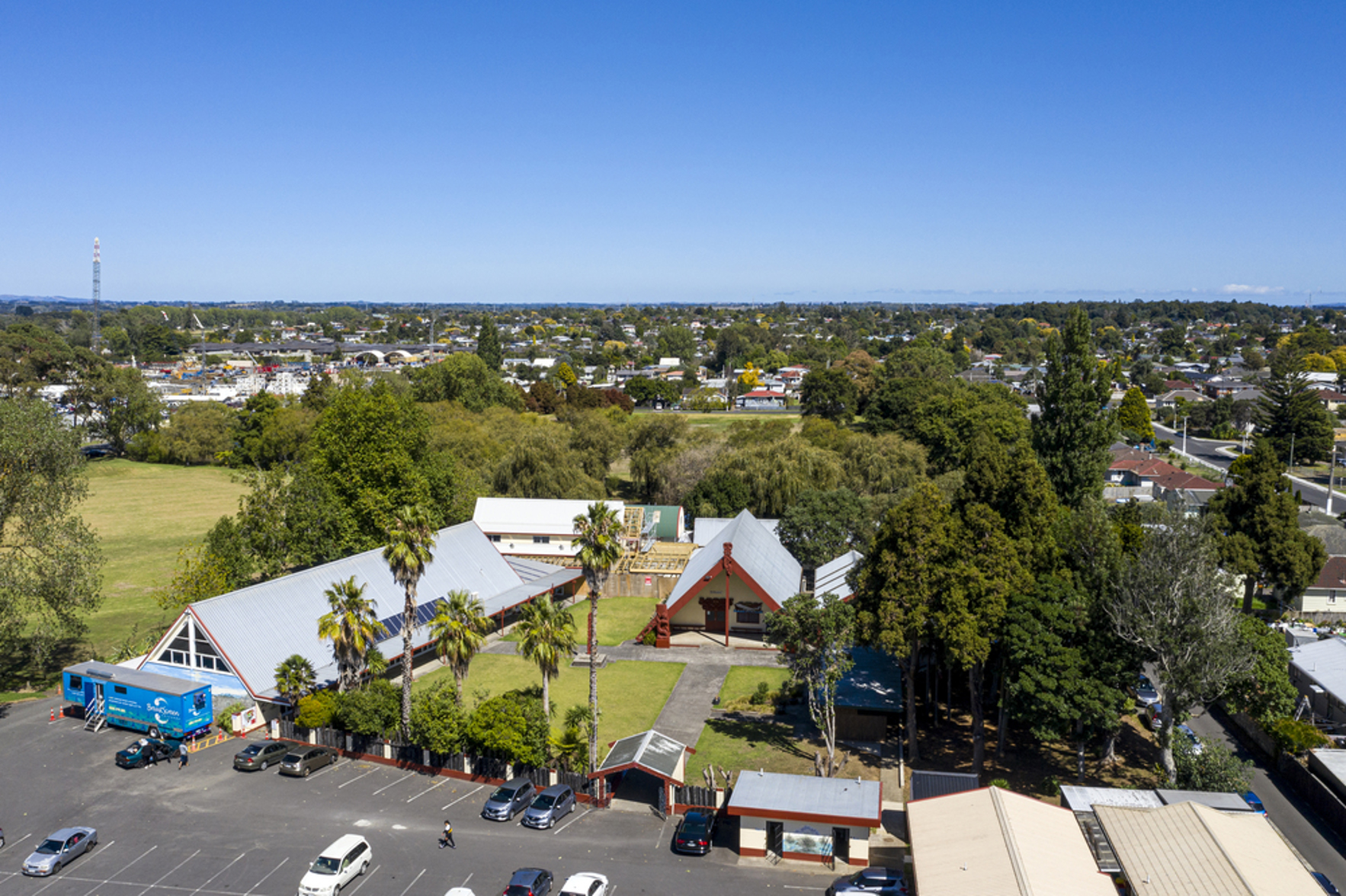
“This is Tamaoho whenua, so we’ve always had a role to play,” says Ben Leonard, kaimahi at Ngāti Tamaoho Trust. “Our marae has flooded, our urupā have been impacted. This isn’t new to us, we’ve been watching the water rise for a long time.”
One of the first shared activities was a climate haerenga, led by Ngāti Tamaoho, which took council staff and community partners around key sites in Papakura.
“We showed where our pā used to be, how the land and water used to work together, and how those changes affect us now,” says Edith Tuhimata, Kaitohu Taiao at Ngāti Tamaoho. “Understanding that context matters.”
She continues, “Back in the day we purposely moved our kāinga back and up on the hills so that we wouldn’t be affected by flooding. We left the wetlands to deal with the waterways. This is knowledge we’ve held for generations.”
This perspective has brought a long-term view to the pilot and helped shift the conversation from short-term fixes to intergenerational resilience.
Community leadership in action: The Papakura Community Resilience Network
One of the strongest examples of local leadership has come from the Papakura Community Resilience Network (CRN), chaired by Brian Collins. What began as a community disaster preparedness group brought together by the Papakura Local Board, has evolved into a wide-reaching network focused on practical climate action and social connection.
“Our job is to raise awareness, build connection, and help people get prepared,” says Brian. “We’re not just pushing out safety messages, we’re trying to rebuild the kind of community that knows how to take care of itself.”
The CRN has led a suite of engagement efforts: a growing website, social media campaigns, a podcast series called Tū Tika Tips, and face-to-face events. “There’s a lot of loneliness out there,” Brian says. “These projects, whether it’s a street meet or a workshop, are helping people feel connected again.”
A different kind of process
At the heart of the pilot has been a shift in how decisions are made. Rather than applying for funding through formal council channels, local groups pitched their ideas to each other and decided collectively how to allocate seed funding.