
Our Urban Ngāhere image

Our Urban Ngāhere

Anna Delaney

1 February 2026

A decade-long mission to cool, connect and re-canopy South Auckland

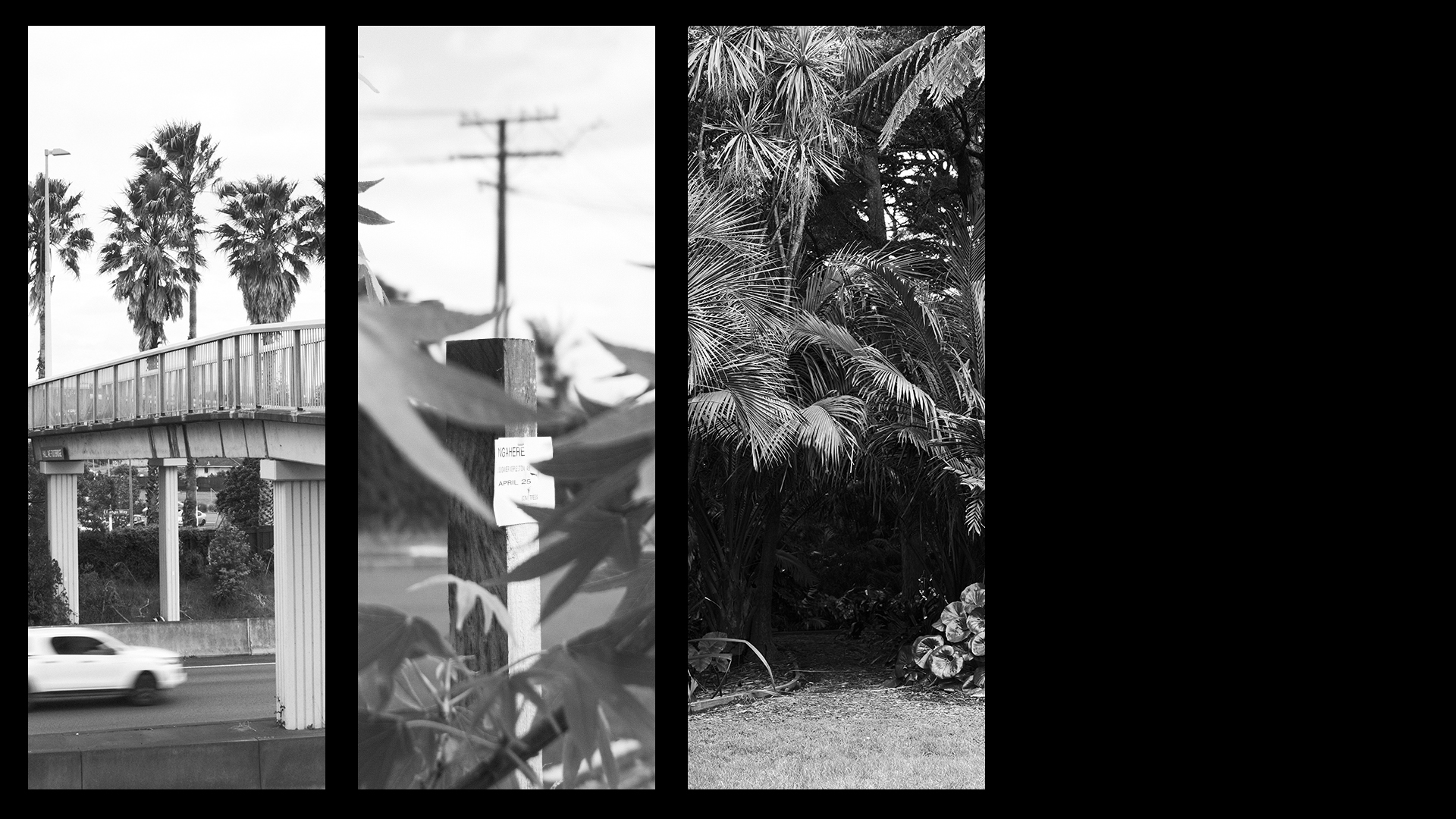
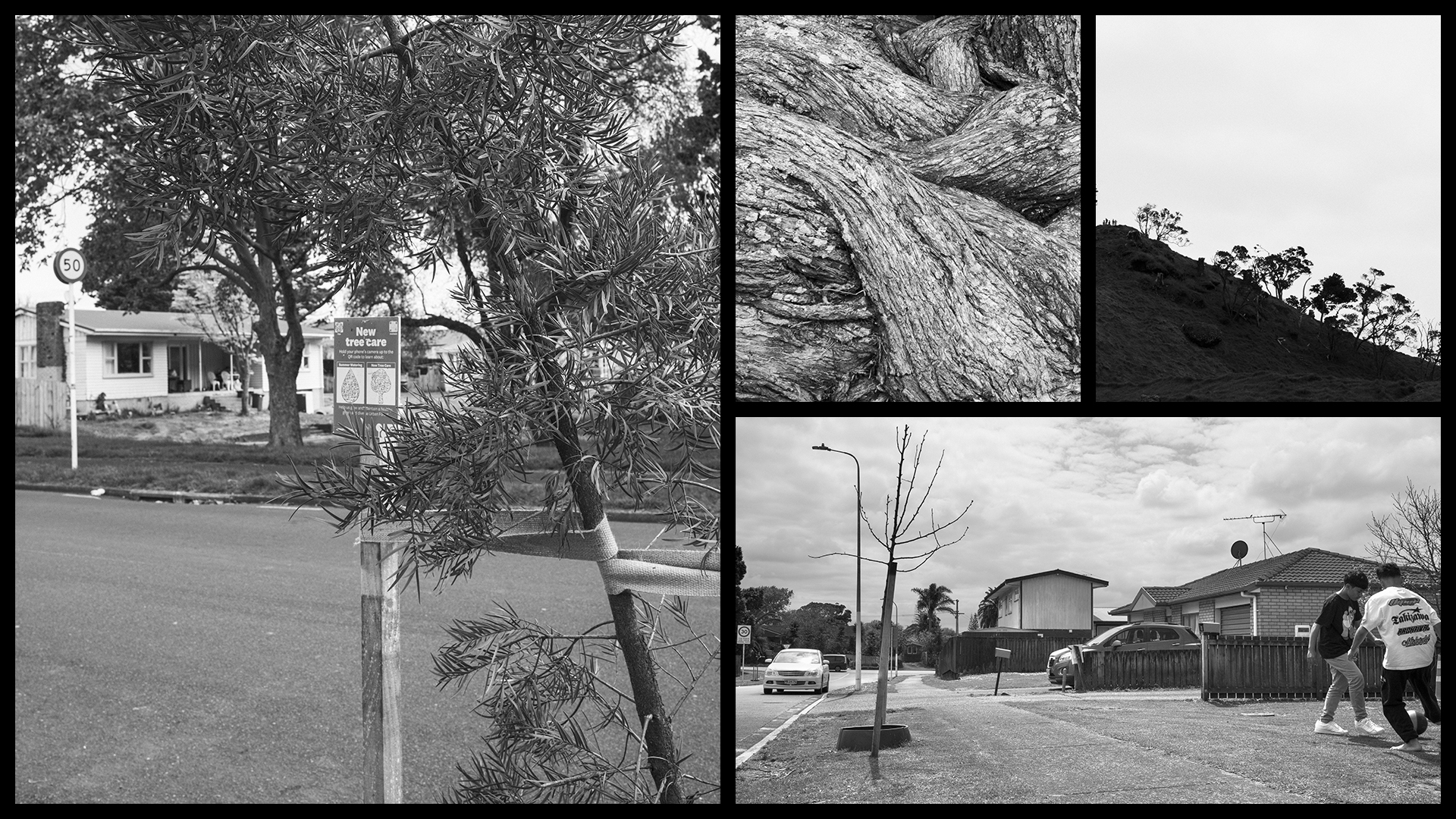
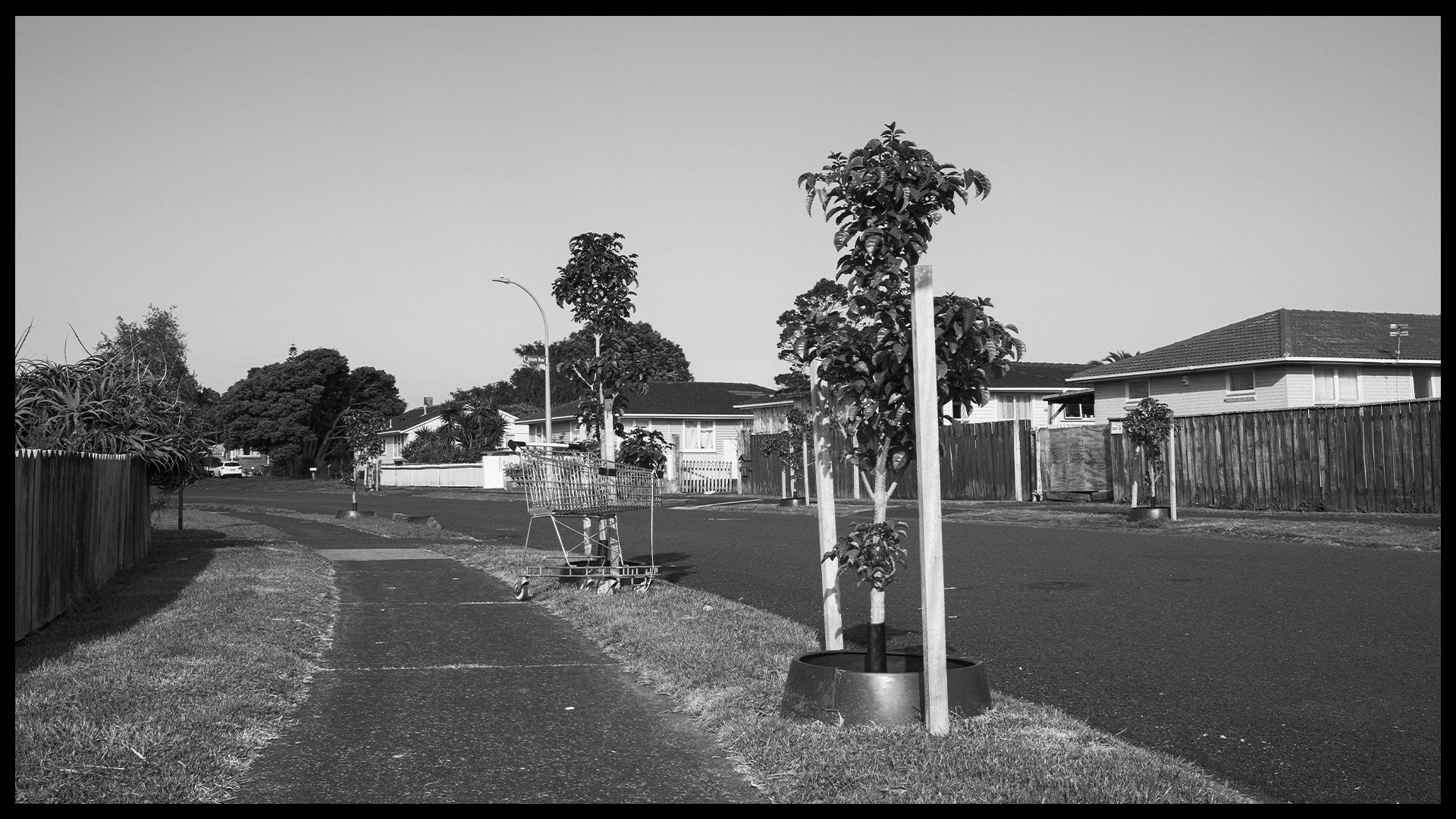
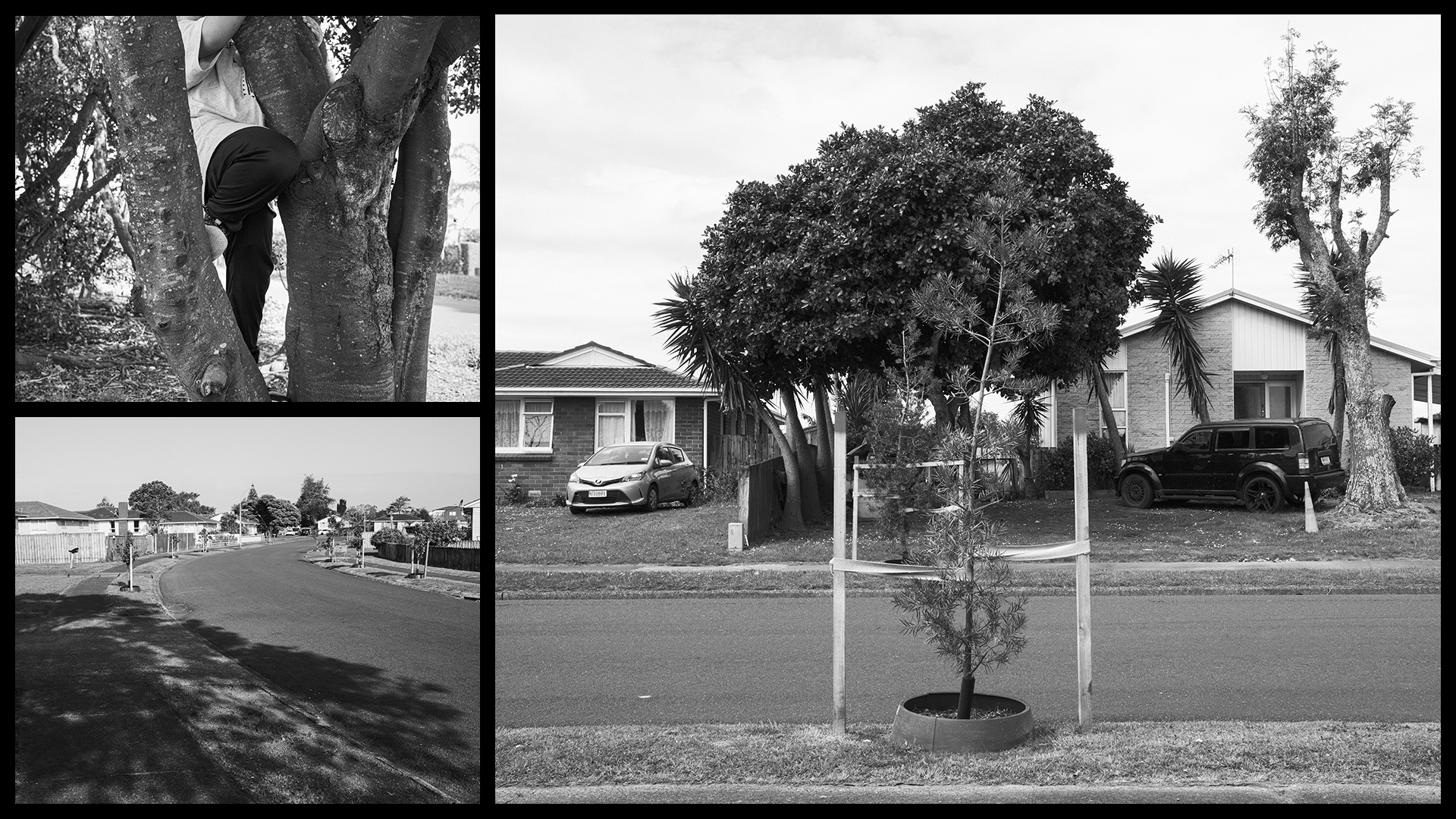
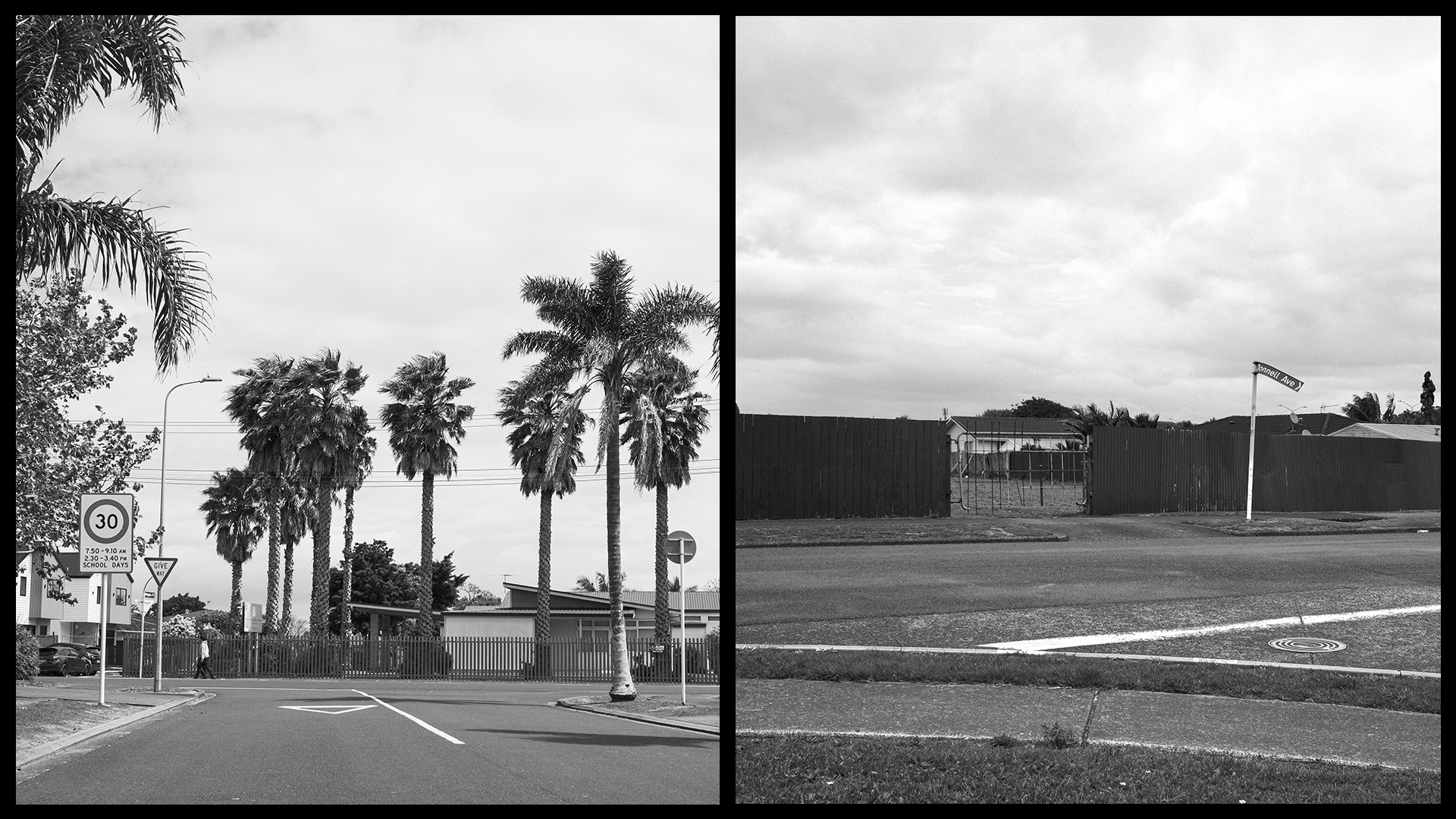
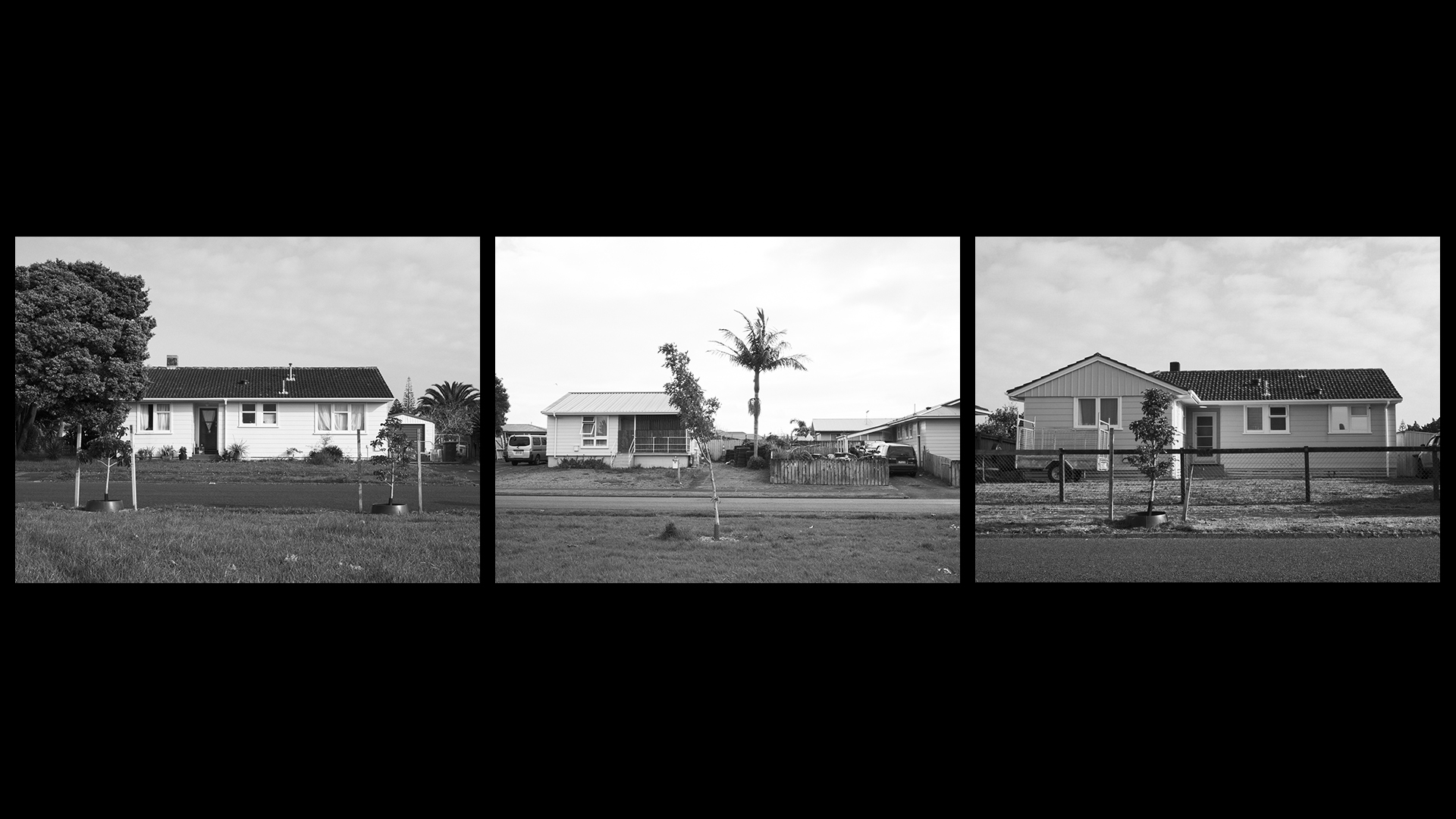
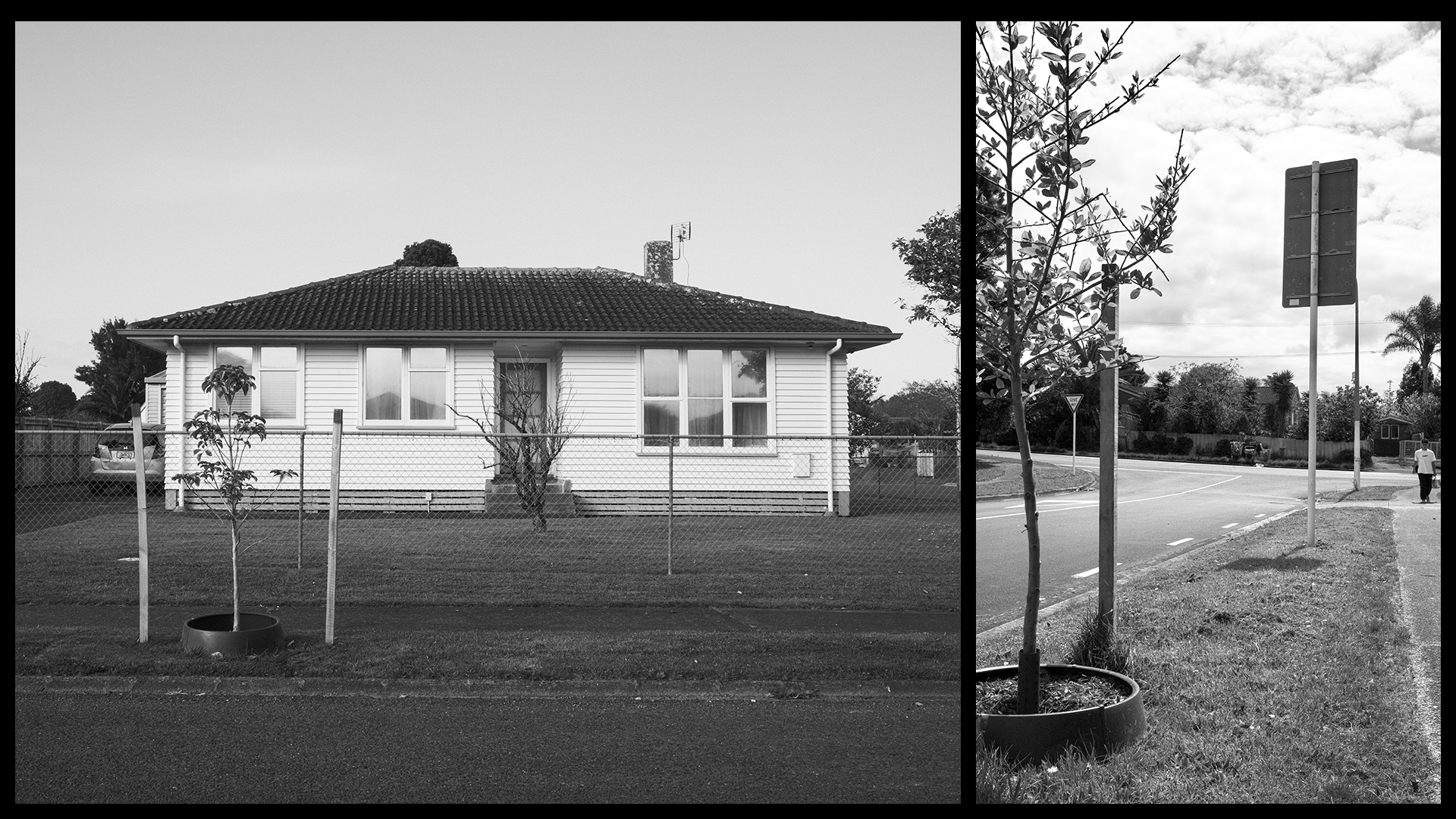
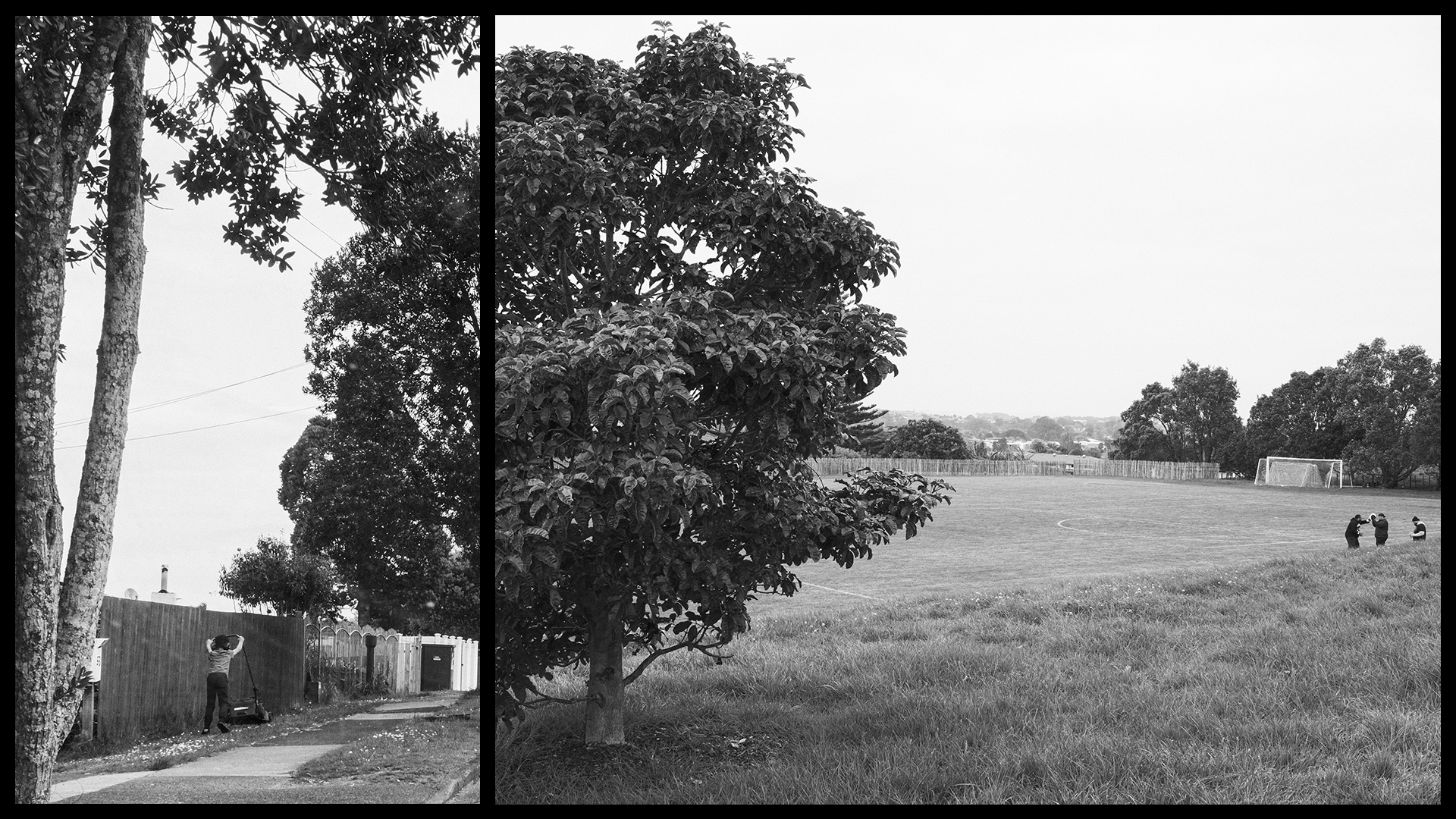
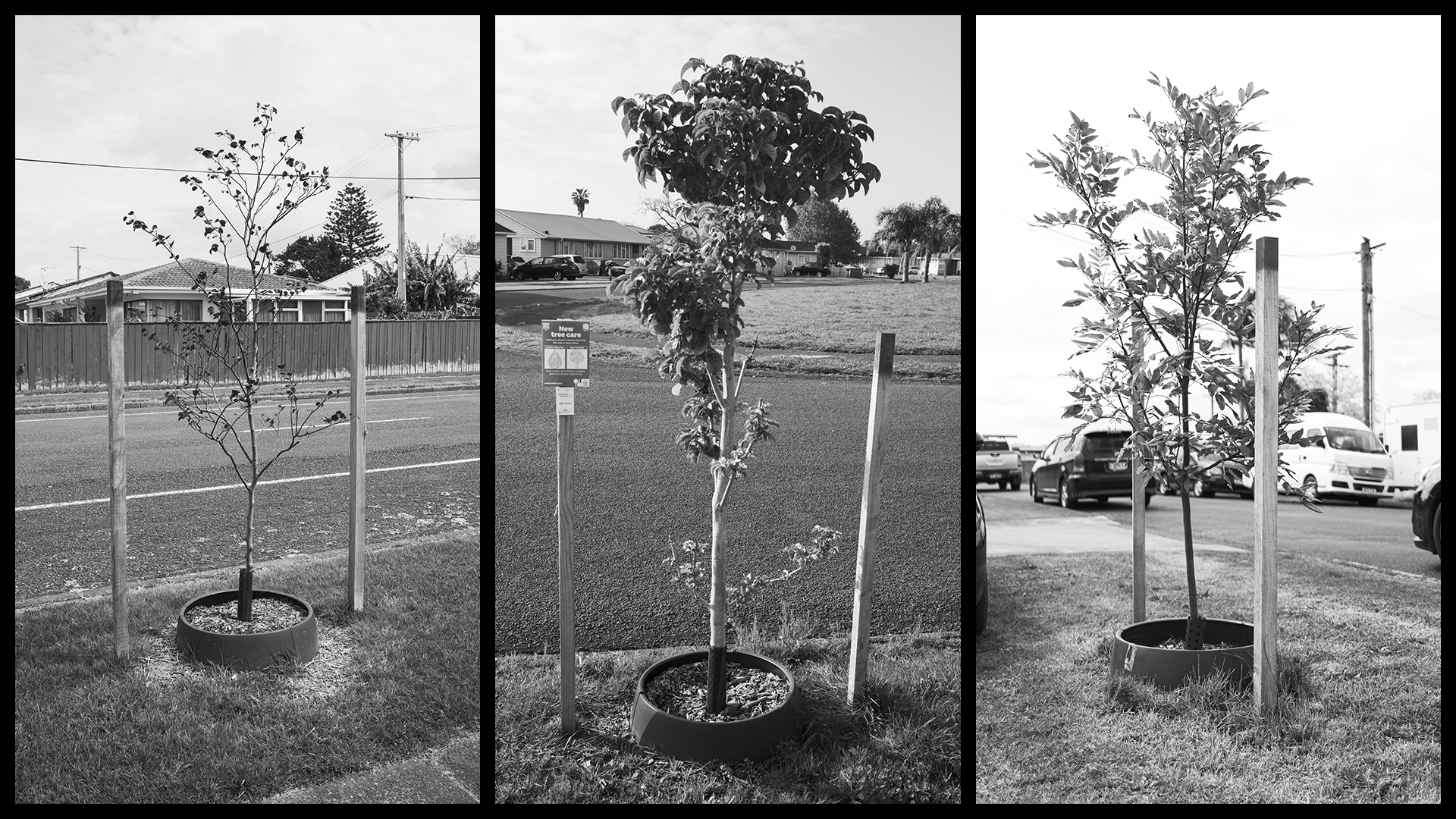
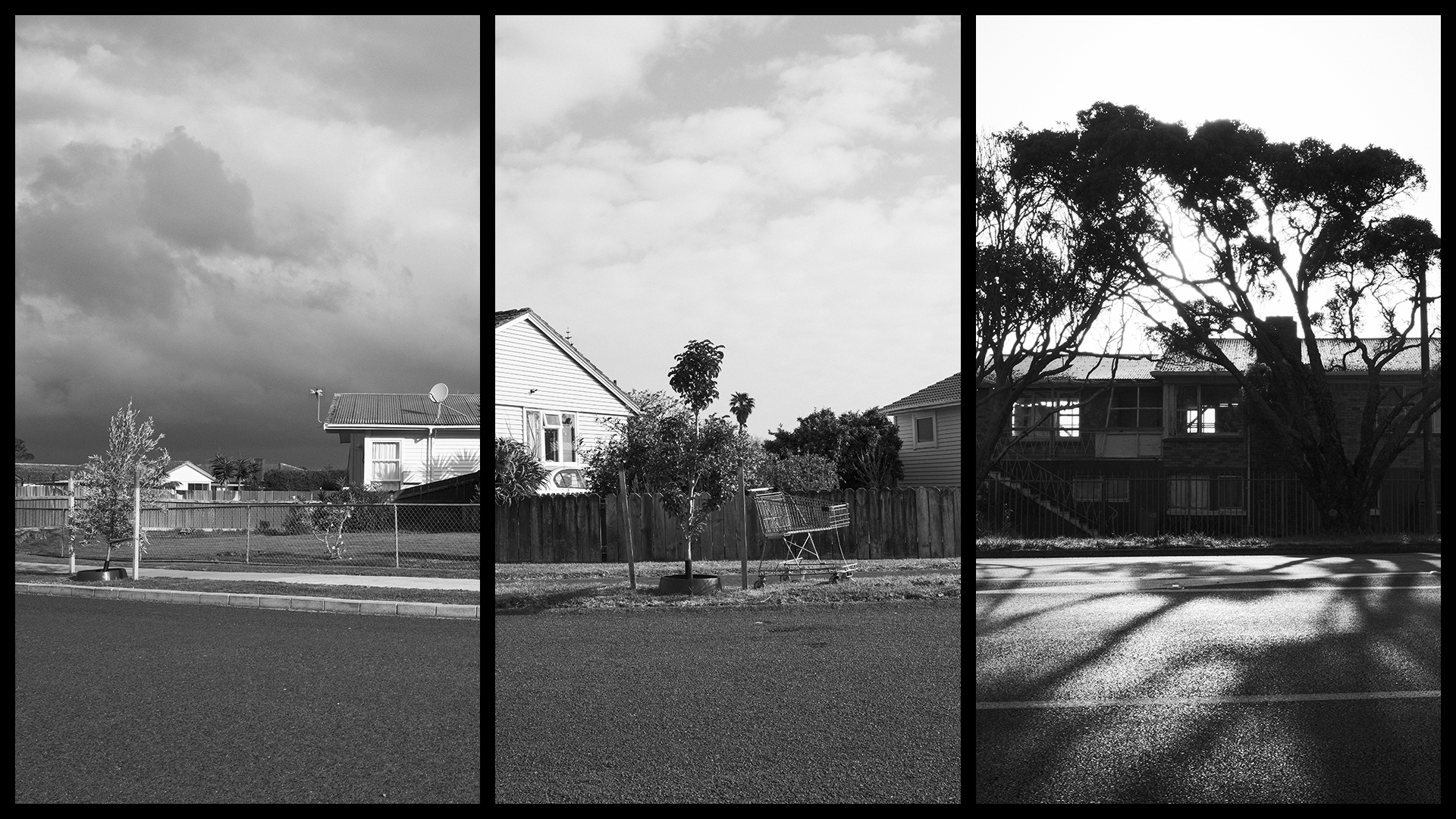
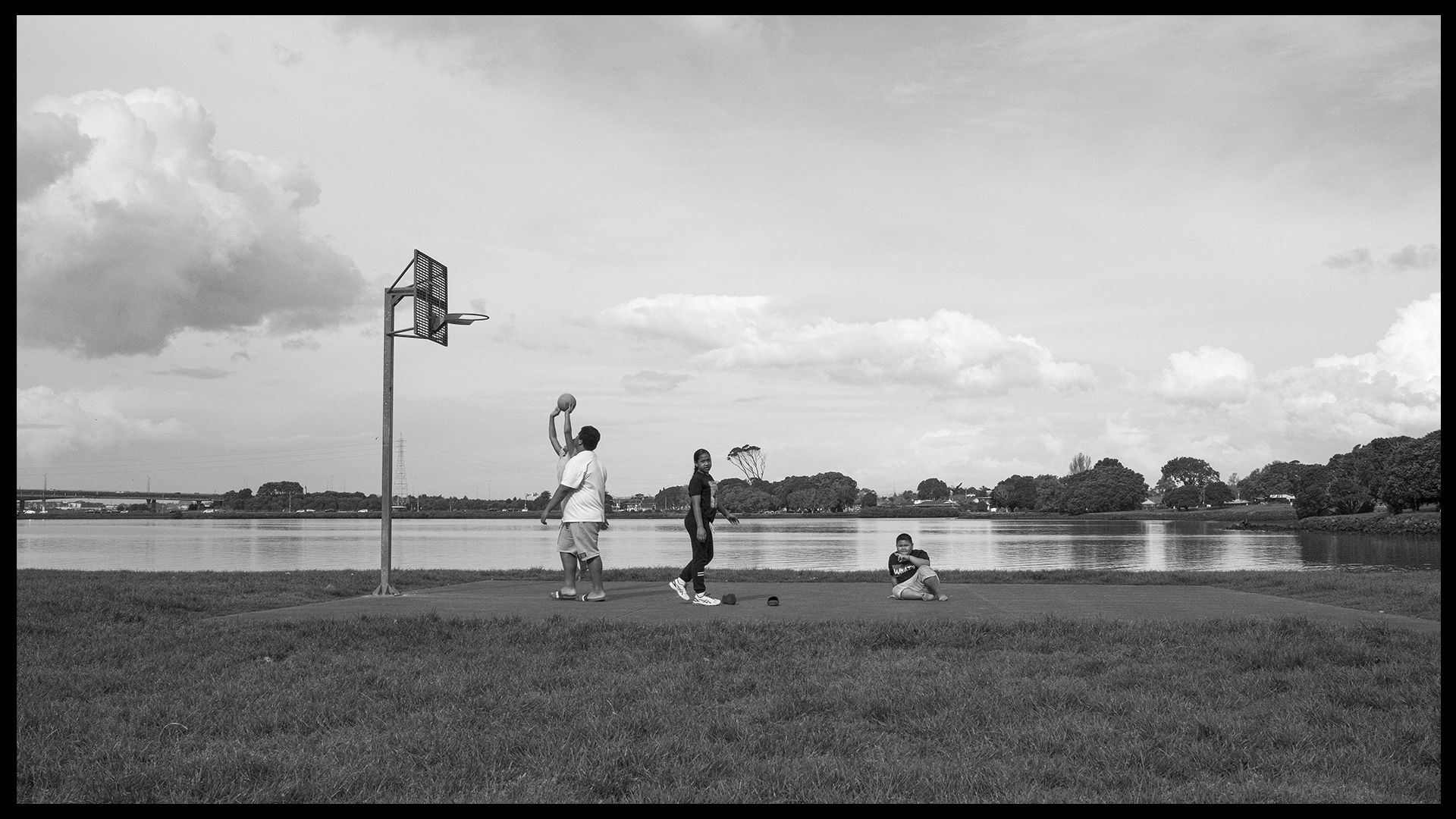
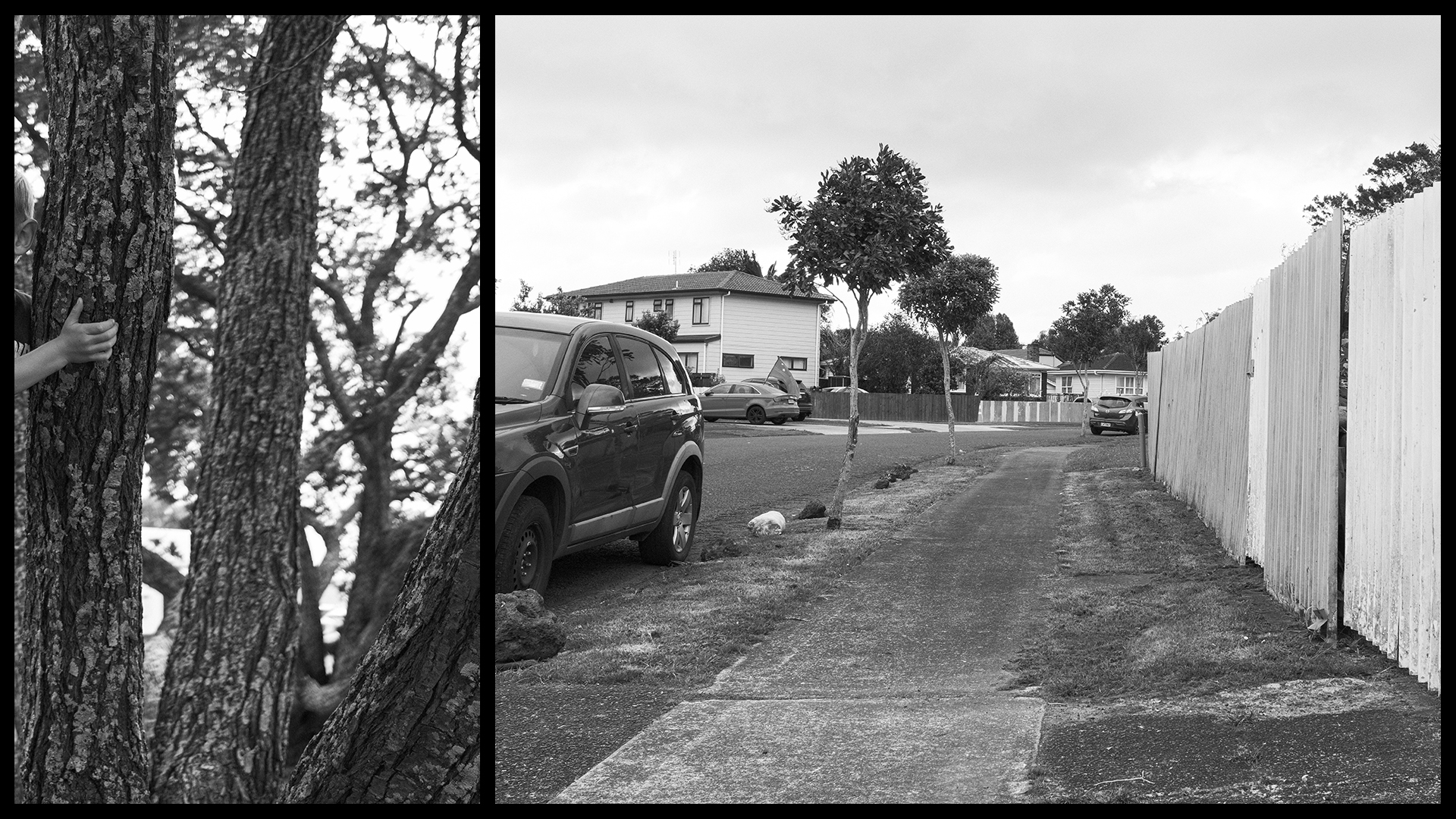
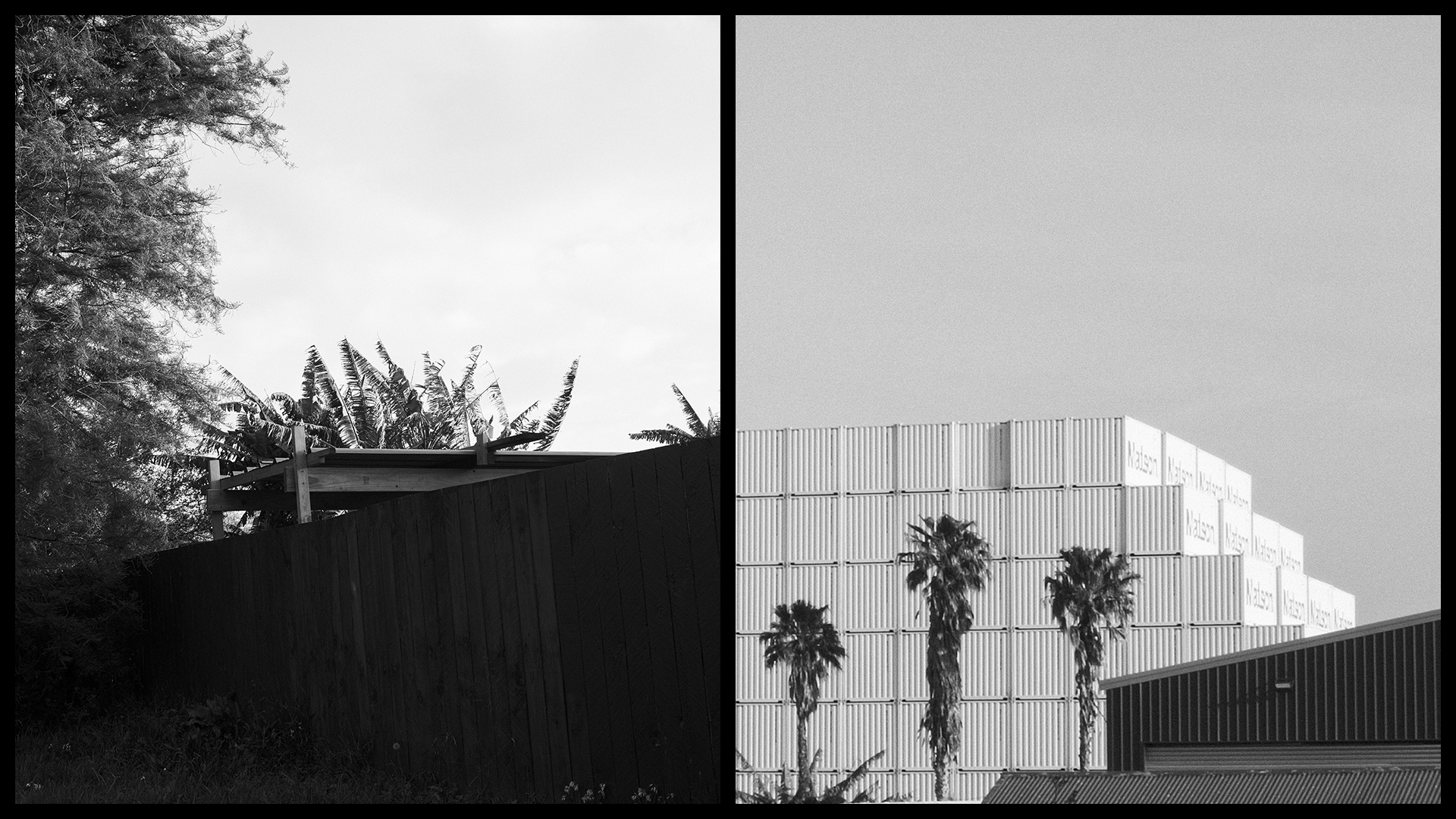
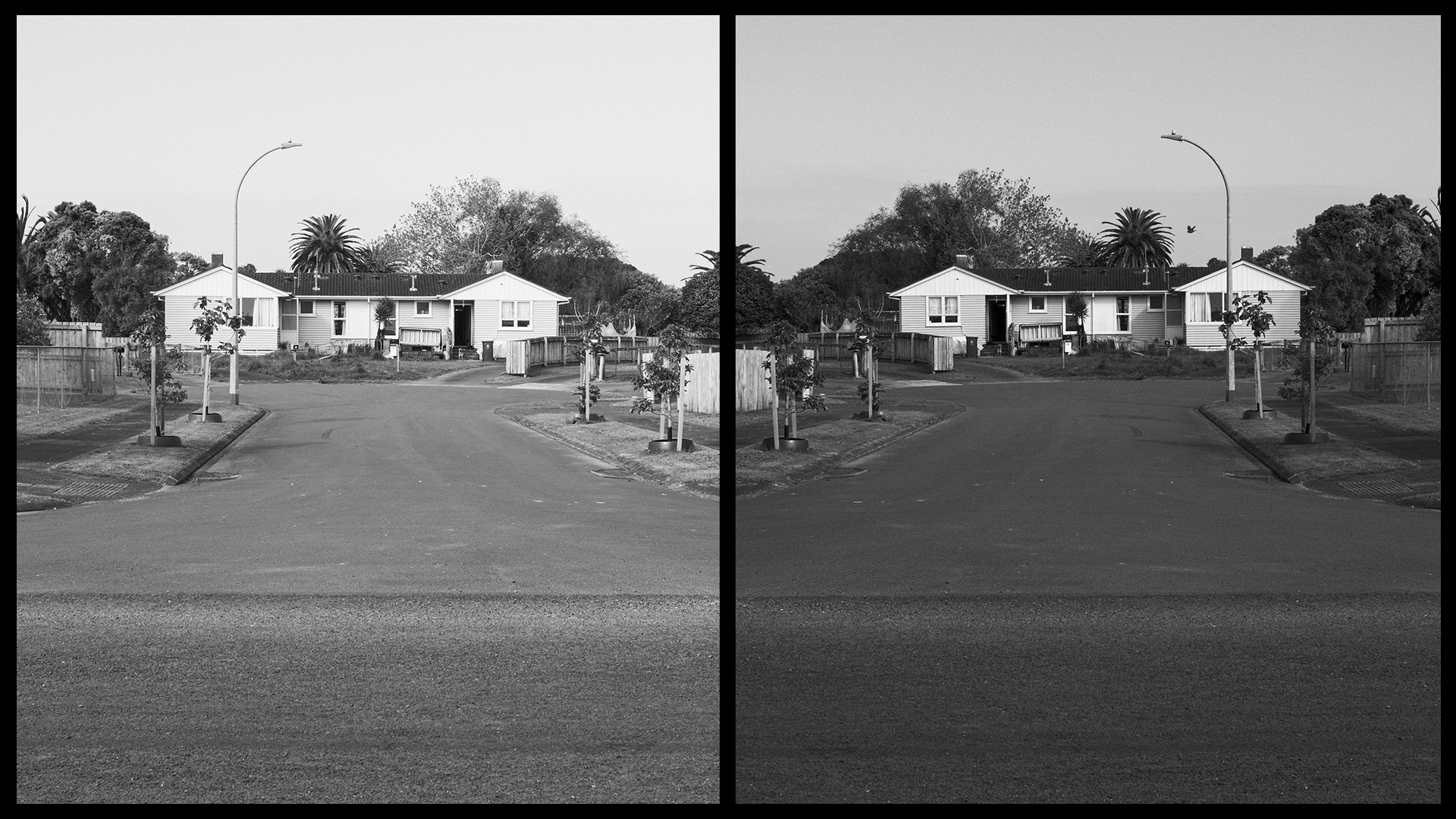
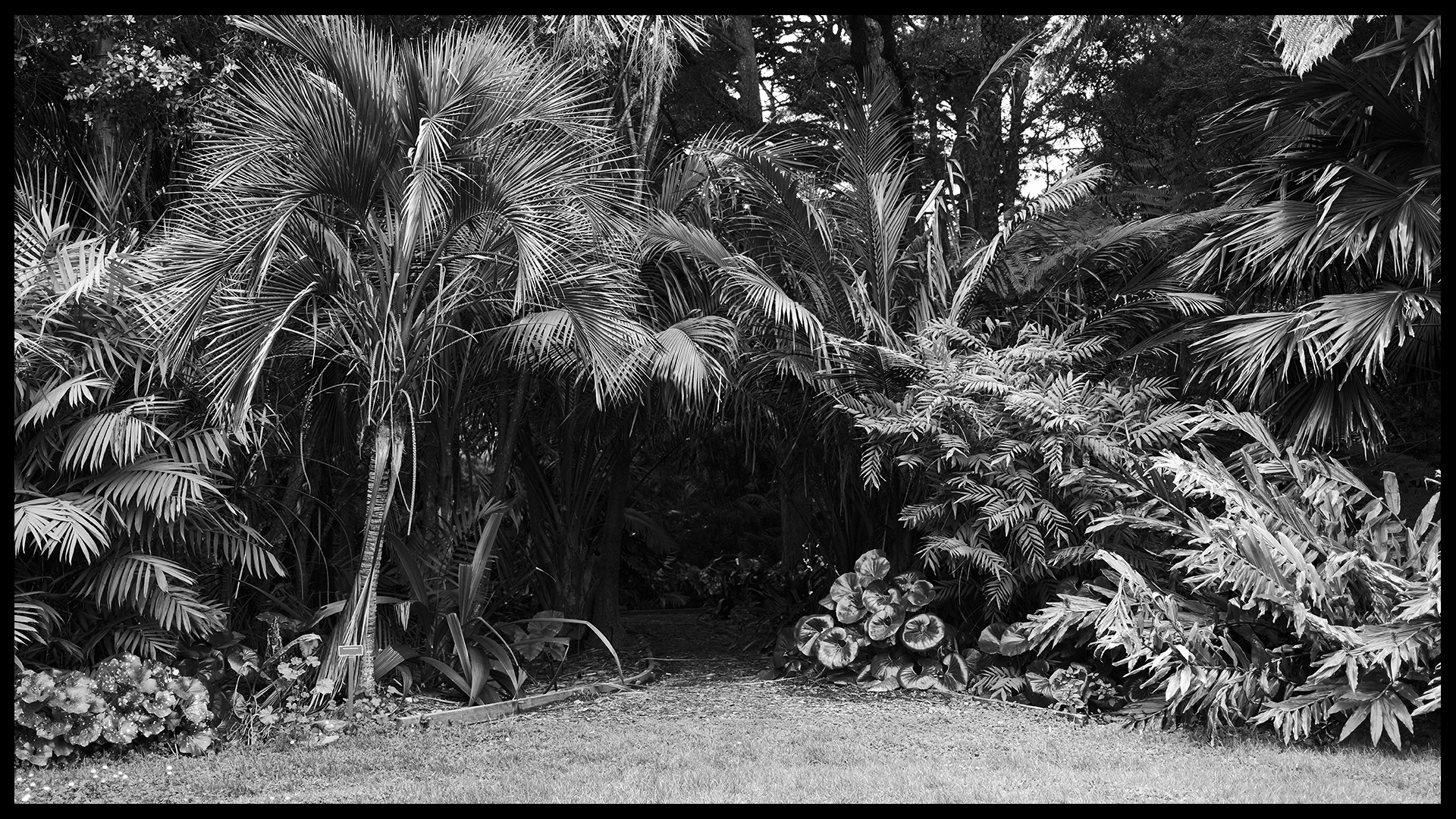
This essay is made up of 15 photo montages. Click on the "view" icon in the top left of each to expand the montage and explore these photographs in detail. The captions provide an overview of the reasoning behind the programme, challenges for the trees and their communities, and the extraordinary climate benefits our urban ngāhere can bring.

In the spring of 2025, we invited Māngere photographer Anna Delany to document the Urban Ngāhere, particularly in the streets close to and bordering Ambury Park. In her images, full of contrast and tension, Anna’s lens asks us to imagine – and even have faith in – a future that may be slow to arrive. Her photographs, infused with patience and gravity, provide insight into the long-term project of growing trees and communities despite sometimes difficult conditions.
Urban Ngāhere is a 10-year tree planting programme, and 2024 is the first year of planting. It aims to reduce urban heat and increase flood protection, support biodiversity, capture carbon and improve the feel of our streets.   Trees do all this and, once established, need little maintenance. The goal is to plant 80,000 large trees over 10 years.
Urban Ngāhere is a 10-year tree planting programme, and 2024 is the first year of planting. It aims to reduce urban heat and increase flood protection, support biodiversity, capture carbon and improve the feel of our streets. Trees do all this and, once established, need little maintenance. The goal is to plant 80,000 large trees over 10 years.
South Auckland has fewer trees due to its development history. Built on cleared farmland, tree planting wasn’t prioritised as housing and industry expanded. The loss accelerated after 2015 law changes removed tree protections, especially in denser, lower-income areas. Auckland Council sees this is an equity issue and is restoring canopy cover where it’s needed most. While South Auckland is a priority, the programme is region-wide.
The urban ngāhere is vital cultural heritage. Remnants of native forest represent kai o te ngāhere (traditional supermarkets), wānanga o te ngāhere (learning centres), kapata rongoā (the medicine cabinet), kura o te ngāhere (schools) and wairua o te ngāhere (the spiritual domain).
Seen from above, tree canopy appears as a green patchwork covering streets, backyards and parks. The goal is to increase Auckland’s canopy from 15% to 30% by 2050.
The programme prioritises streets with no or only a few trees, as well as streets with schools, parks, lots of pedestrians or public transport routes along them. Highest priority areas are Māngere, Papatoetoe, Manurewa, Papakura and Franklin. The programme works closely with utility providers, so roots won’t interfere with power, water or telecommunications infrastructure.
Extreme heat is the fastest changing climate extreme worldwide. Even in cooler climates like New Zealand, we still have periods of relatively intense heat that can be hard to cope with. Street trees can cool a neighbourhood by up to 10°C.
Cooler suburbs keep babies, kaumātua, outdoor workers and people with health conditions more safe.
Look for the stakes. The urban forest has a colour code. Pink = planted in 2024, red = 2025. The planting season is May to September (it should be April, but soils are staying drier for longer).
Specific trees are selected for each location, considering things like wind, salt and water. Sadly the trees can’t all be natives, which are vulnerable to pests and not always suited to street conditions. A mix of native, exotic and deciduous trees provide light in winter and shade in summer. Larger tree species offer more shade, soak up more rainfall and stormwater, store more carbon and help calm traffic.
Trees reduce traffic noise, making streets calmer and more liveable.
The Urban Ngāhere programme is funded through the Long-Term Plan as well as targeted rates. Urban Ngāhere trees are monitored, weeded, pruned and fed for three years. As fast-growing trees, by three years old they’re robust enough to survive on their own.
Keeping trees in the ground is hard. Nearly one in three new trees don’t make it: they’re harmed or dug up intentionally. People might prefer parking on berms, dislike leaf litter, or want different species. Every tree lost costs, and means future streets will be less comfortable.
Data and strategy: In the past, street trees were planted in a reactive way. Now Urban Ngāhere uses data to plan for both local and regional canopies. The tech allows council staff and contractors to track every tree over time.
Keep exploring your urban ngāhere.

Keep exploring

About Anna Delany

Anna Delany is an Auckland-based photographer who finds beauty in life’s quiet, everyday moments. Her work moves fluidly between human connection and environment – exploring identity, camaraderie and the subtle rhythms of everyday life. Each photograph feels like a pause, a moment of recognition, carved out of the flow of time.

Anna has collaborated with acclaimed creatives, agencies, and publications around the globe, including Magnum and Wax Poetics. Her recent series, Double Blessings, celebrates the deep connection of twins from the neighbourhoods of Māngere and Ōtāhuhu, highlighting the warmth and symmetry of community life in South Auckland.

https://www.mangereotahuhuarts.org.nz/double-blessings

You May Also Like

Planet-proof Papakura preview image
Climate adaptation
Community 5 Feb 2026

Planet-proof Papakura

How Papakura is planning together for a changing climate
Chill tactics preview image
TOP TIPS
Environment 2 Feb 2026

Chill tactics

A warmer future might sound dreamy, but extreme heat is tough on our health, homes, and daily lives. Here are ten local tips to help you stay cool and cope as temperatures continue to climb.
Kia ora is a climate strategy preview image
resilient communities
Community 2 Feb 2026

Kia ora is a climate strategy

Forget the bunker and the loo paper — the real secret to climate resilience is your neighbours. Yep, even the cool couple downstairs. If the idea of saying hi makes you sweat, here’s your easy, introvert-friendly guide to building community, one small step at a time.
A new approach to city-fringe living quietly unfolds amid Grey Lynn villas preview image
OUR AUCKLAND
Community 21 Nov 2025

A new approach to city-fringe living quietly unfolds amid Grey Lynn villas

What happens when architecture, community and sustainability come together.
Changes to natural hazard information on your property LIM preview image
OUR AUCKLAND
18 Nov 2025

Changes to natural hazard information on your property LIM

Auckland Council has made natural hazard information more understandable on property Land Information Memorandums (LIMs)...
New beginnings for Milford: Ngā Wairau project brings hope and renewal preview image
OUR AUCKLAND
Climate Action 17 Nov 2025

New beginnings for Milford: Ngā Wairau project brings hope and renewal

The official launch of the Ngā Wairau blue-green network, a long-term project designed to reduce flood risk and restore the natural health of the area.

JOIN OUR NEWSLETTER

Join our newsletter to receive the latest climate action and community news.

This website requires cookies to provide all of its features.

For more information on what data is contained in the cookies, please click the 'Read More' button. To accept cookies from this site, please click the 'I Agree' button.

Read More