
Meadowbank School

Measuring the invisible and decarbonising the drop-off
Meadowbank Primary is a Green-Gold Enviroschool with a long history of integrating sustainability into teaching and learning. But one concept was always tricky to communicate – greenhouse gases and their impacts on our climate.
Led by Jude Hannan and her Year 6 enviro group, Meadowbank’s Mana Ora project originated at the programme launch, where Maggie (Year 6) pitched a transport-related idea. Among the guests listening to the pitches was Celia Wells from GNS Science, a geoscience research institute active in understanding urban emissions. In response to the students’ vision for influencing travel choices, Celia and Jude negotiated a plan to do some real-life scientific inquiry with atmospheric equipment.
Over a six-week period, GNS Science carbon dioxide and carbon monoxide sensors were attached to a fence in the drop-off area. These tracked the concentration of these gases in the atmosphere and were able to detect clear peaks at the morning drop-off time. The sensor data supported the Enviro group’s observations that many students were being driven to school.
In response, the enviro group designed a campaign, with support from AT (Auckland Transport) and Sustainable Schools, to encourage students and whānau to swap out car trips for active transport trips. The fortnight-long festival included a myriad of activities, such as Glam Your Wheels Monday (celebrating scooters and bikes), Wear What Ya Want Walking Wednesday (mufti day for walkers) and Feel Good Friday (encouraging walking to school with friends).
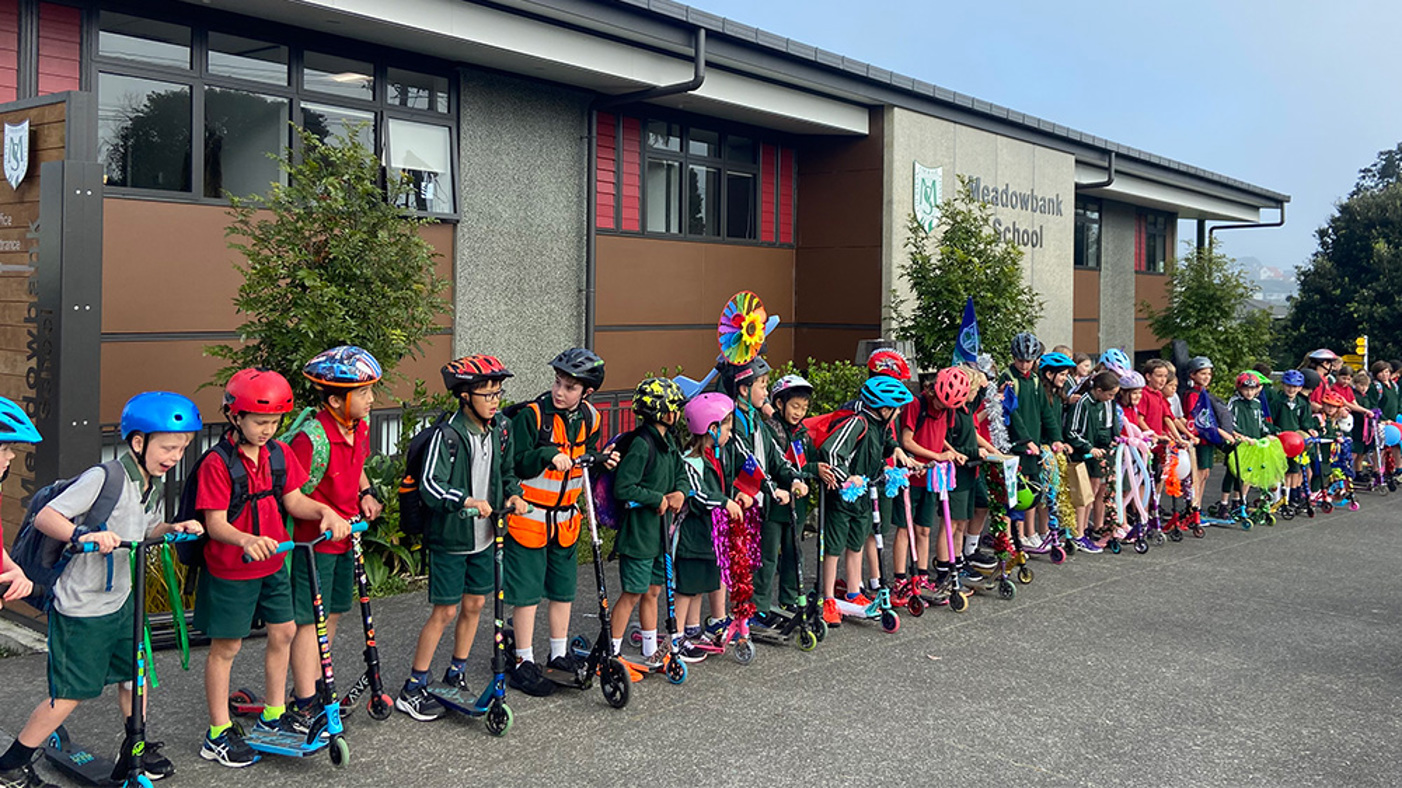
The school community’s engagement in the festival was excellent, and the quantity of scooters parked at school increased from 4 on one day in the pre-festival week to 197 on one of the festival days. The mode swaps dramatically reduced the emissions detected by the carbon dioxide and monoxide sensors, to the point where the festival period was comparable to the school holidays.
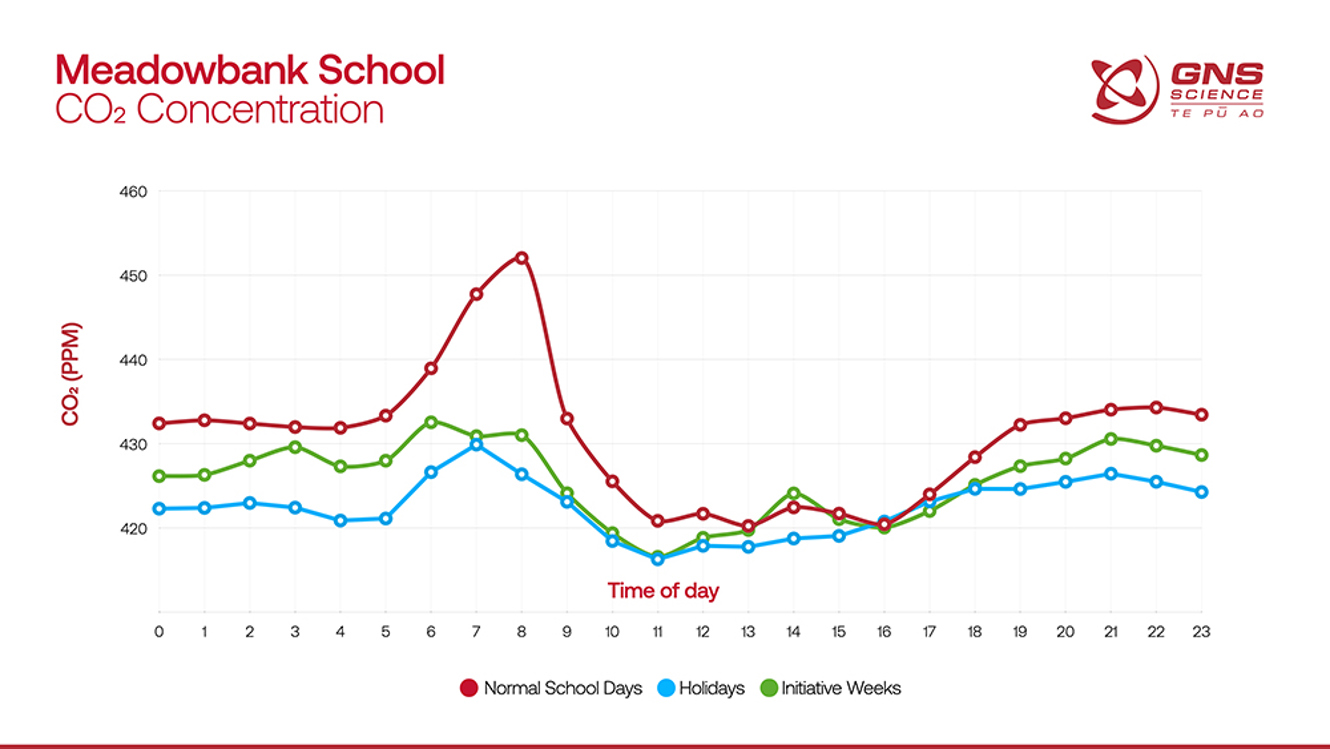
Maintaining the momentum beyond the festival period has been a key focus for the team.
“We used a 3D printer to make bag tags with scooter, bike and walk on them to reward people and remind them to keep it up. And we’re going to do Wheels Wednesday and Feel Good Friday every week for the rest of the year”. Maggie, Year 6
As part of the support package from GNS, scientist Rachel Lawson held an interactive session to educate the enviro group and wider student population about scientists, carbon and the carbon cycle.
Jude was delighted with the opportunity to pioneer emissions measurement related to school travel. The partnership with GNS also gave students an opportunity to be inspired by scientists, but also to inspire them.
“It’s felt like a genuine two-way collaboration, with the students being interviewed by the GNS social scientists, which has given the students a confidence boost knowing that their voices matter. It’s important that we listen because it’s their future”. Jude Hannan
The next steps in the project will include creating a mural of the carbon cycle that will be displayed in a prominent location and used as a teaching and learning tool.
Nicky Elmore, a previous teacher at Meadowbank and the current Sustainable Schools Advisor, credits much of the project’s success to school culture. “Well-established Enviroschools are used to partnerships and student empowerment”, she says. “Maggie’s idea was able to be followed through from the launch to the celebration”.
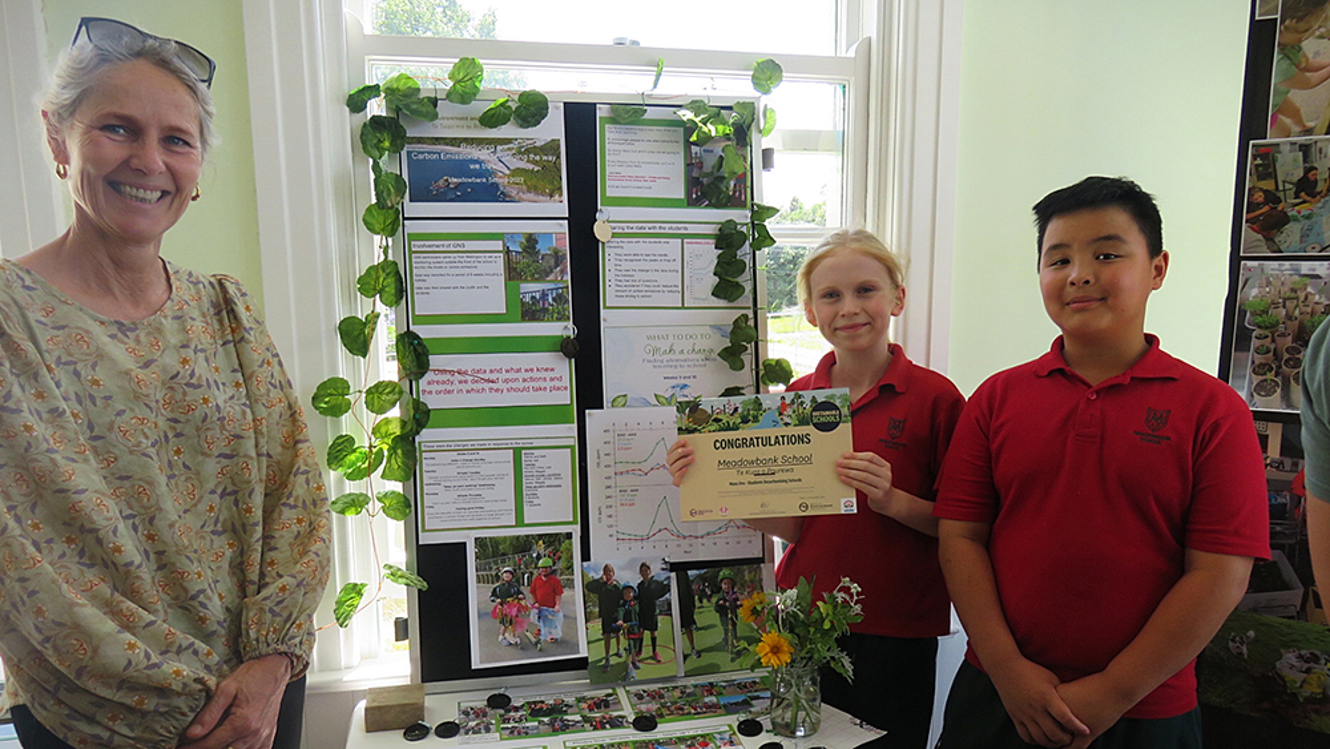
Nicky is also excited about the potential for building on this project in other settings.
“The pilot has given us information about what is possible in terms of measuring the invisible, and how we can communicate the connections between transport choices and the climate. This is huge for the schooling sector.” Nicky Elmore
Did you know? Walking to school even once a week instead of driving can save 64kg of carbon dioxide emissions over a year* Learn more.
*Assumes a 3km journey
You May Also Like

Renting in Tāmaki Makaurau

2023 Storm Recovery Office enters final phase

Ngā Wairau through my lens

From Brazil to Mount Maunganui

Love Food Hate Waste grants now open
