
May Road School

Te Ngā Kaitiaki o Te Auaunga Awa
May Road School’s participation in Mana Ora helped to reinforce their role as Enviroschool guardians of Te Auaunga Awa, the body of water that flows through Freeland Reserve. Through a creative art project, the primary school was able to further promote care of the wetland within the wider Roskill community.
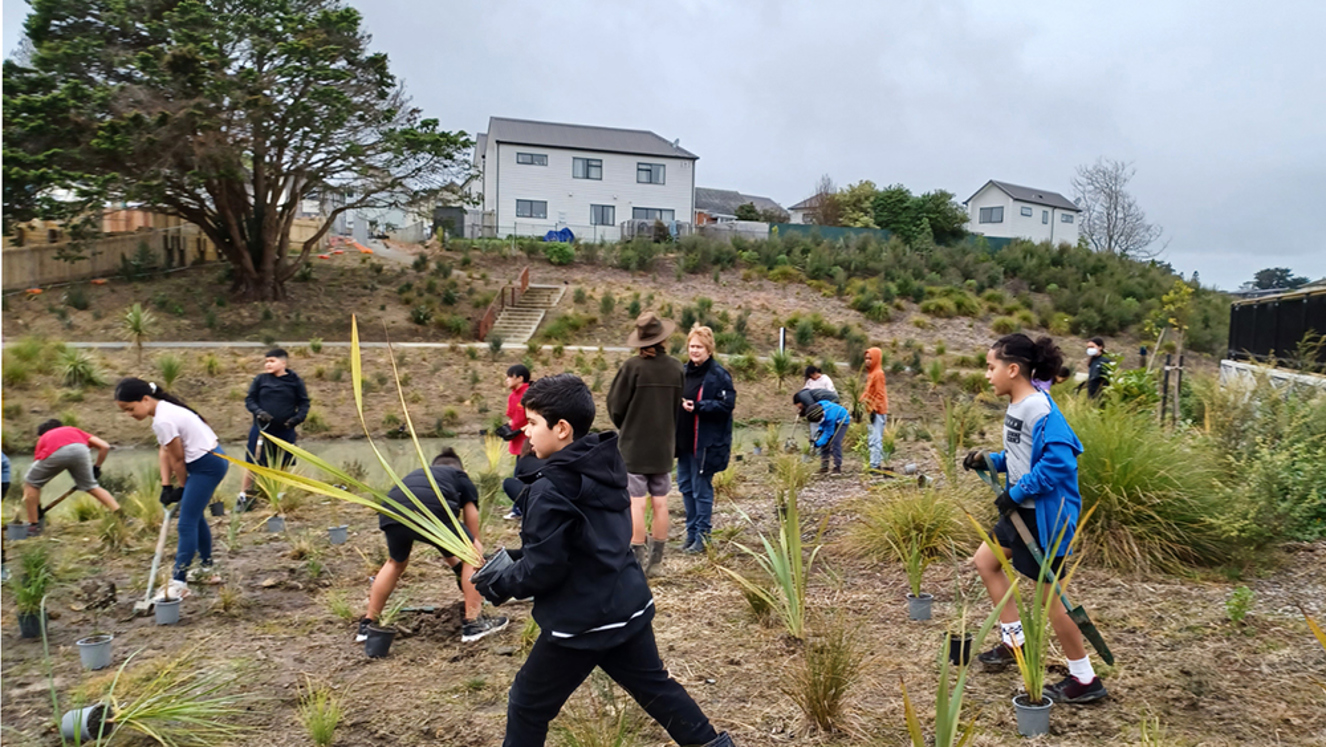
Since 2022, May Road School has been involved in the Freeland Reserve upgrade, a collaboration between Kāinga Ora, Auckland Council’s Healthy Waters, the Puketāpapa Local Board, Piritahi and mana whenua.
The upgrade, which saw 130m of the underground creek ‘daylighted’ from pipes, offered diverse opportunities for students to get stuck into tree planting, clean ups, and water quality and eDNA testing. Moreover, Freeland Reserve now contains recreational spaces and wide paths, designed to promote walking, cycling, and community events.
Alongside senior teacher Meryl Ulugia-Pua, Ilisapesi (Year 5), Samuel and Georgia (Year 6) attended the Mana Ora programme launch and dreamed up a creative idea after seeing a transport-themed mural project.
“We took inspiration from the first ever Mana Ora meeting, where this one person … they made a mural to help people bike more. So we took inspiration from that and we decided to make a mural ourselves.” Samuel, Year 6
Back at school, the trio worked with Meryl to develop a provocative piece of art. Their goal was to highlight the importance of Te Auaunga and the role the community can play in preserving it.
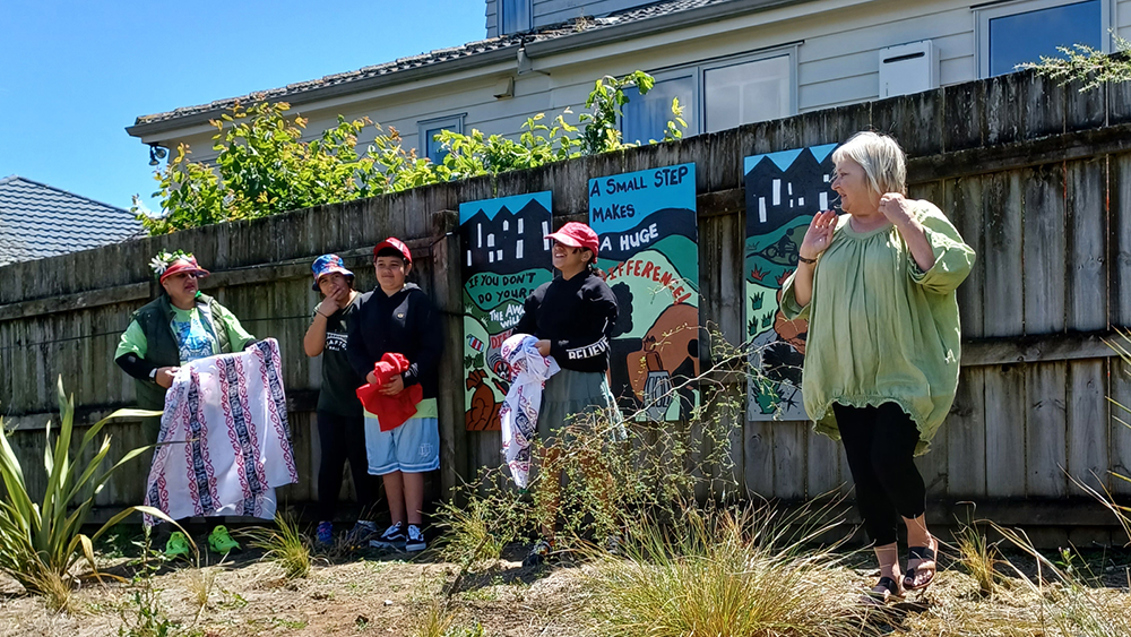
The next steps included securing a grant from the Mana Ora Climate Action Fund for materials, painting the panels with a larger group of students, and obtaining permission from Puketāpapa Local Board to hang them on a fence in the heart of Freeland Reserve. In early November, the mural was installed and unveiled in a special ceremony in front of the whole school.
The mural’s design is simple yet conveys powerful words and imagery. The left panel depicts the awa grey and polluted with rubbish and issues a dramatic warning about the impact of indifference and neglect. The middle panel conveys an encouraging mantra and shows people using bins properly and weeding. The final panel displays the wetland looking vibrant and biodiverse, with ducks, pūkeko and native plants thriving and people walking and cycling along the paths.
“The main message of the mural is to help keep the awa alive, make sure people don’t pollute it … to show how it should be treated and how it shouldn’t be treated”. Samuel, Year 6
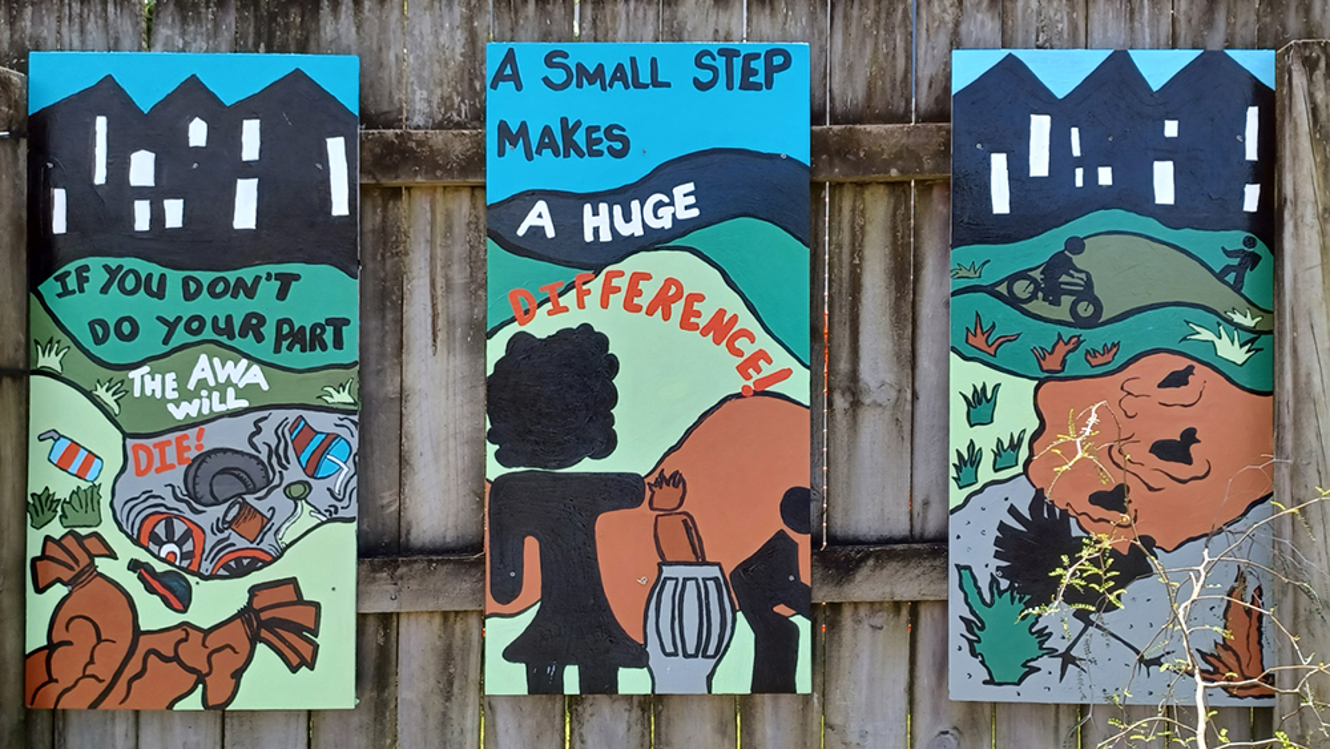
Ilisapesi explains that the mural is about inviting people to make a difference and showing that the place “could become something really, really different in the future, for many future generations”.
For Georgia, the mural project honours and encourages people to connect to this “very sacred area”. She reflects that there is more work to do, and it may take time for people to take pride in the space.
“I think we could get this area to be looking a bit more of a place where we want to be, a place where it’s fun to be with friends or come here for a walk or bike ride”. Georgia, Year 6
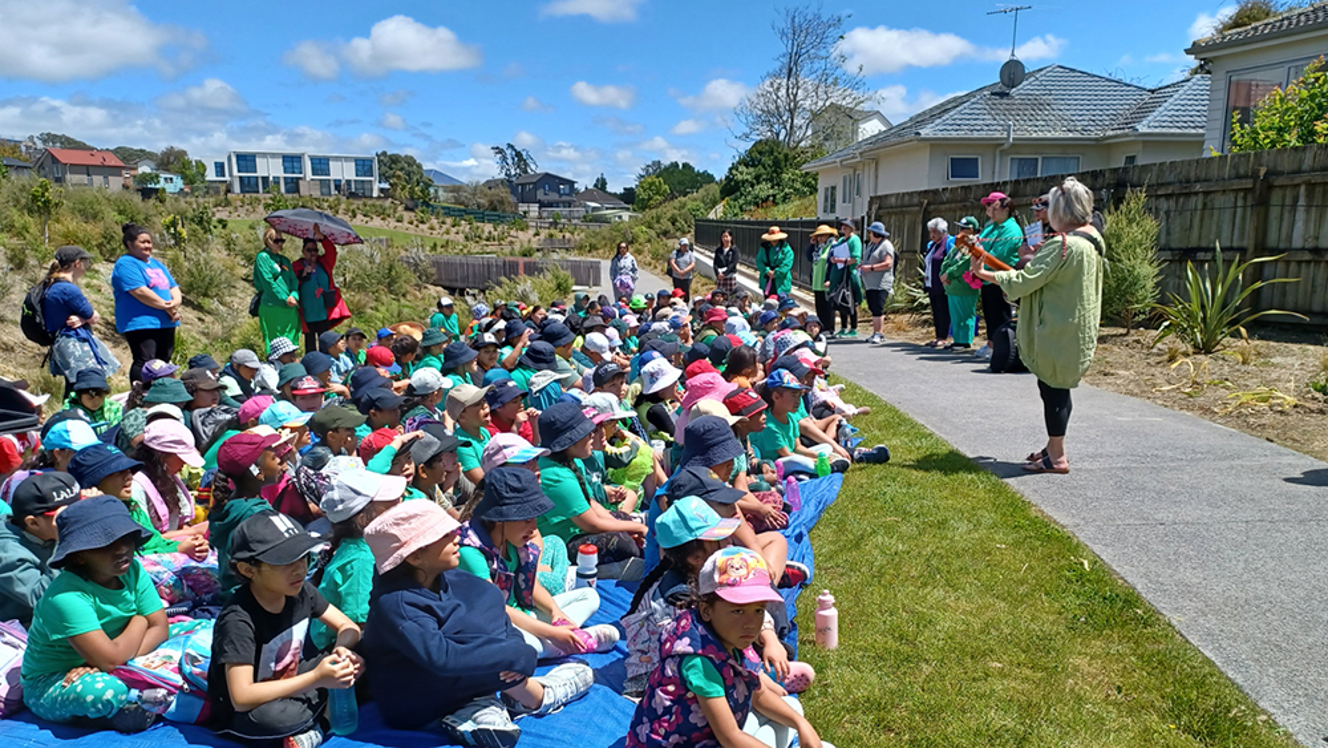
Alongside the mural’s reveal, the ceremony included waiata and speeches from the project leaders, principal Lynda Stuart and May Road’s Sustainable Schools Advisor Nicky Elmore. The whole school then rotated through a range of interactive activities, including bike riding, an expo about May Road’s mahi over the last two years, and a sausage sizzle.
“For May Road, Mana Ora has helped embed community connections, active transport, and biodiversity improvements. It’s also created a sense of belonging. I can see the tamariki are focused on the future, on the third panel in their mural, and they hope that future students will continue the mahi they have started and over time the awa and reserve will flourish.” Nicky Elmore
Did you know? Planting one native tree can sequester approximately 15 kg of carbon dioxide over a year. Learn more.
Did you know? Cycling to school just once a week instead of driving can save around 106kg of carbon dioxide emissions over a year* Learn more.
*Assumes a 5km journey
You May Also Like

Opening new doors

Rānui and Henderson 2023 storm recovery

Travel choices driving Auckland's climate progress

25 years of CCET

Auckland's 2026 Zero Waste Awards Winners Announced
