
Kristin School

Understanding commuter choices and openness to change
For Kristin School, the Mana Ora programme stimulated a deep dive into transport and community consultation. And what started out as a student-led project in term one has shifted over the course of 2023 into an enduring partnership between students, senior managers and operational staff and external experts.
In March 2023, a trio of Kristin’s Year 12 student environmental leaders attended the Mana Ora launch. In their action planning time, the team formulated an ambitious idea.
“We’d noticed that lots of students live near school but use private transport because of timing issues, so we thought we could develop an environmental bus with an optimised route and solve the problem by encouraging more people to go on a bus.” Byron, Year 12
The team’s vision extended beyond their composite school. Indeed, they hoped to partner with Auckland Transport and other local schools so that the bus could offer a sustainable travel option for students across the North Harbour and Albany areas. To make it more attractive to prospective passengers, they envisaged the bus could be adorned with bright decals.
The team secured Climate Action Funding to further explore their concept, but were challenged with some members needing to step back. The remaining Year 12 duo, Byron Gao and Hyunjune Won, started to doubt whether their ambitious idea was the best use of their time and energy.
“We talked with our school’s business director and operations manager and realised that a new bus route actually wasn’t that viable … so our primary goal became to implement more biking and walking.” Byron, Year 12
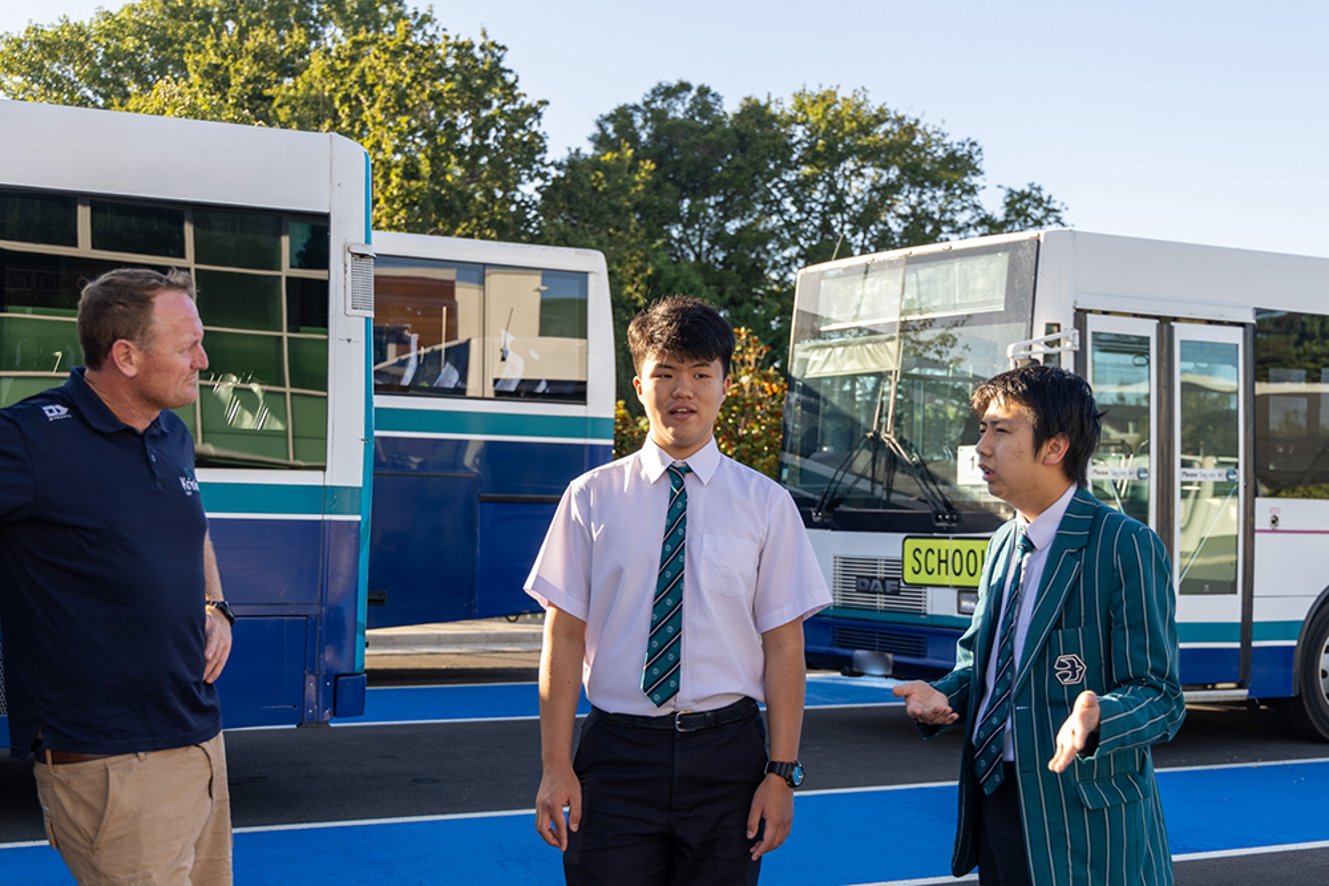
In discussion with senior leaders, Byron and Hyunjune realised that this new direction required some dedicated consultation with the wider Kristin community. As well as understanding families’ transport choices, they wanted to sound out parents’ openness to change.
With help from their Psychology faculty teacher, Byron and Hyunjune designed an online survey and were supported by administrative staff to send the link out to parents of students who were not current bus users. Promisingly, they received almost 100 responses.
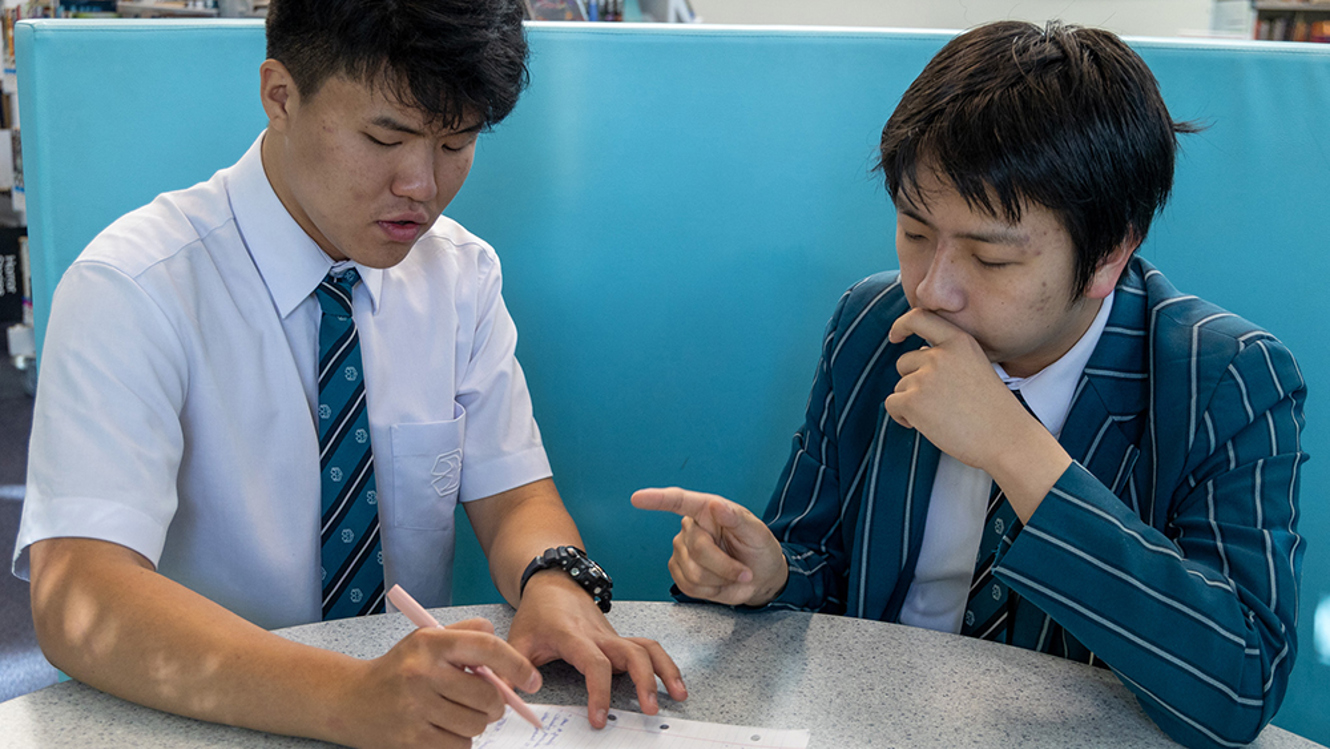
The first part of the survey explored usual travel modes and the reasoning behind these. Approximately 80% of respondents reported that they typically used private transport. While many were dropping children off on the way to work, the majority were making a special trip. The top reason people gave for their travel mode was that it was time efficient. Byron and Hyunjune were intrigued by that, given how congested the school entrances can get in the mornings.
“It would be interesting to know how long it takes parents to get out of the carpark, and how much time that adds to their commute.” Hyunjune, Year 12
The second part of the survey asked respondents if their children owned a bike or scooter, and 70% confirmed that they did. However, 90% said they were not using these in their travel to and from school. With some carefully worded questions, the team were able to detect that families were not using bikes and scooters primarily because of concerns about safety and time efficiency. However, about a quarter of respondents agreed that if infrastructure and storage were improved, biking or scootering would be an option.
The final survey section was for the caregivers of children living within 2km of the school. It sounded out people’s willingness to participate in a hypothetical walking school bus or bike train. Promisingly, around two thirds of respondents were receptive. As Hyunjune explains, “Quite a lot of parents are willing to change”.
“We figure if we can educate children about how to bike safely, we can improve parents’ concerns about safety. If you can get people biking together in a group, cars are more likely to respect you.” Byron, Year 12
In 2024, Byron and Hyunjune continue their conversations with Kristin senior leaders about how best to introduce cycle skills training to students as well as bike and walking school buses. They are grateful to have been introduced to active travel specialists at Auckland Transport who can provide expertise and support.
A possible avenue for student engagement is to integrate the new initiatives with the school’s international baccalaureate (IB) programme, which requires students to complete service activities. As Byron explains, older children might not feel a walking school bus is necessary, but they could help supervise the initiative and gain credits towards the IB for their service and leadership.
When asked what they had gained from being involved in Mana Ora, Byron explains that he has learnt how to “act towards climate change as a student”.
“Often it’s hard to address carbon on a personal level, but its really worthwhile making change at school … we see our actions changing some other people’s thinking, we’re already seeing some junior students responding to us. We’re really happy more people are responding”. Byron, Year 12
Hyunjune has enjoyed working collaboratively with the school’s senior managers.
“Before this, I wouldn’t normally think of talking to those senior people and saying I want to do this project. It really allowed me to talk to them and see that they think of our project in a positive light … they are interested in supporting us in achieving the goal.” Hyunjune, Year 12
Did you know? Walking to school even once a week (instead of driving) can save 64kg of carbon dioxide emissions over a year.* Learn more.
*Assumes a 3km journey
You May Also Like

Renting in Tāmaki Makaurau

2023 Storm Recovery Office enters final phase

Ngā Wairau through my lens

From Brazil to Mount Maunganui

Love Food Hate Waste grants now open
