


Mauri
For the people of Tāmaki Makaurau, the connection to our taiao is a strong source of wellbeing. In our everyday lives, we’re grateful to breathe clean air, listen to birdsong, walk in the bush and feel part of a thriving ecosystem that sustains the mauri – the life force – of all living things.

Damage to our interdependent ecosystems
Climate impacts such as rising air and sea temperatures and stronger storms, as well as urban and rural development, can damage our complex and interdependent ecosystems. Climate change is endangering taonga species and accelerating biodiversity loss.

Care and repair
We can prevent more damage by focusing on the care and repair of our natural systems, as we plan for climate disruption. Healthy ecosystems provide the essentials for life: clean air, fresh water, fertile soil and nutritious kai. They shelter and sustain taonga species, uphold biodiversity and regulate climate systems that keep our world in balance.

Cultural and spiiritual significance
Beyond physical survival, thriving ecosystems carry deep cultural, spiritual and emotional significance: tohu in the natural world guide our decisions. The maramataka (lunar calendar) aligns our lives with the rhythms of the environment. And connection to place shapes our identity – see Wellbeing page.
Healthy, balanced and abundant ecosystems ensure resilience for future generations.
TOOLS AND RESOURCES


How council is helping protect Te Taiao

Urban Ngāhere
Auckland Council’s Urban Ngāhere programme aims to increase the city’s urban tree canopy to 30% overall and at least 15% in every local board area by 2050, guided by the pillars of Knowing, Growing and Protecting.
Urban Ngāhere
Auckland Council’s Urban Ngāhere programme aims to increase the city’s urban tree canopy to 30% overall and at least 15% in every local board area by 2050, guided by the pillars of Knowing, Growing and Protecting.
Urban Ngāhere
Auckland Council’s Urban Ngāhere programme aims to increase the city’s urban tree canopy to 30% overall and at least 15% in every local board area by 2050, guided by the pillars of Knowing, Growing and Protecting.
The programme combats urban heat and reduces flooding risks by cooling neighborhoods and improving stormwater management, while also strengthening nurseries, planting partnerships, regulatory tools, data and public education.
Working closely with mana whenua, community groups, schools and volunteers, including the Tūpuna Maunga Authority, the council supports native plant propagation and restoration across the city. In 2023 alone, these efforts resulted in roughly 750,000 trees planted over 18 hectares, demonstrating a strong community-driven approach.
Tree planting is growing our urban ngāhere, boosting canopy cover that provides habitat for native wildlife and strengthens our connection to nature – supporting healthier more resilient communities.

Local and regional parks
Local and regional parks in Auckland play a crucial role in building climate resilience. The city's parks network spans over 100,000 hectares of open space, biodiverse habitat, and infrastructure (like playgrounds!) that supports both people and nature.
Local and regional parks
Local and regional parks in Auckland play a crucial role in building climate resilience. The city's parks network spans over 100,000 hectares of open space, biodiverse habitat, and infrastructure (like playgrounds!) that supports both people and nature.
Local and regional parks
Local and regional parks in Auckland play a crucial role in building climate resilience. The city's parks network spans over 100,000 hectares of open space, biodiverse habitat, and infrastructure (like playgrounds!) that supports both people and nature.
Regional parks, including the Hunua and Waitākere Ranges, are important ecosystems that supply clean drinking water and support native biodiversity. These areas anchor natural resource protection and underpin our climate adaptation strategies. Parks serve as “green infrastructure”. Natural features capture and slow stormwater runoff, buffer flooding during extreme rain, and reduce urban heat, helping communities cope with a changing climate.
Climate change is also causing increased wildfire risks. We reduce these risks by removing flammable invasive species and maintaining healthy native vegetation to slow the spread of fire.
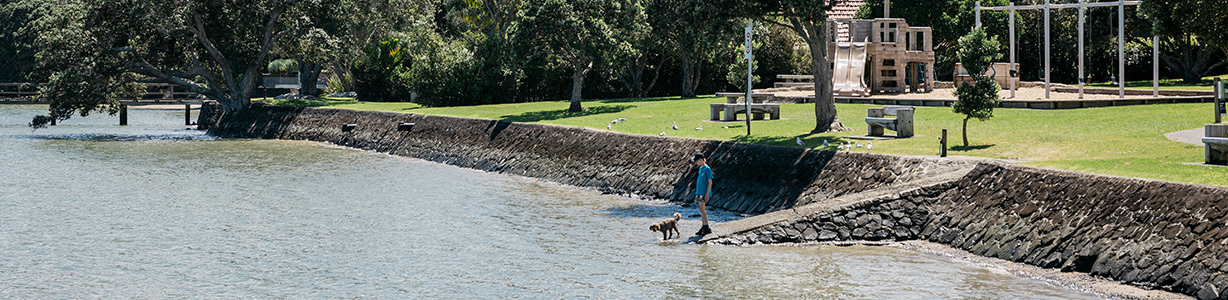
Making Space for Water
Our Making Space for Water programme is an $820 million, 10‑year flood resilience programme, launched in 2024 in response to the extreme weather events of early 2023. It's part of the Tāmaki Makaurau Recovery Plan and is co‑funded by central government.
Making Space for Water
Our Making Space for Water programme is an $820 million, 10‑year flood resilience programme, launched in 2024 in response to the extreme weather events of early 2023. It's part of the Tāmaki Makaurau Recovery Plan and is co‑funded by central government.
Making Space for Water
Our Making Space for Water programme is an $820 million, 10‑year flood resilience programme, launched in 2024 in response to the extreme weather events of early 2023. It's part of the Tāmaki Makaurau Recovery Plan and is co‑funded by central government.
Our Making Space for Water programme is an $820 million, 10‑year flood resilience programme, launched in 2024 in response to the extreme weather events of early 2023. It's part of the Tāmaki Makaurau Recovery Plan and is co‑funded by central government.
The programme prepares for floods and reduces flood risks by making space for water to move safely through neighbourhoods. It includes core initiatives:
- blue‑green projects (see below)
- significant investment in stormwater infrastructure
- increased stormwater maintenance
- stream and waterway resilience
- community, and site-specific solutions to manage flood risks
- flood intelligence tools (like the Auckland Flood Viewer).
Major infrastructure upgrades are now underway.
You can also check out some big Making Space for Water flood resilience projects here:
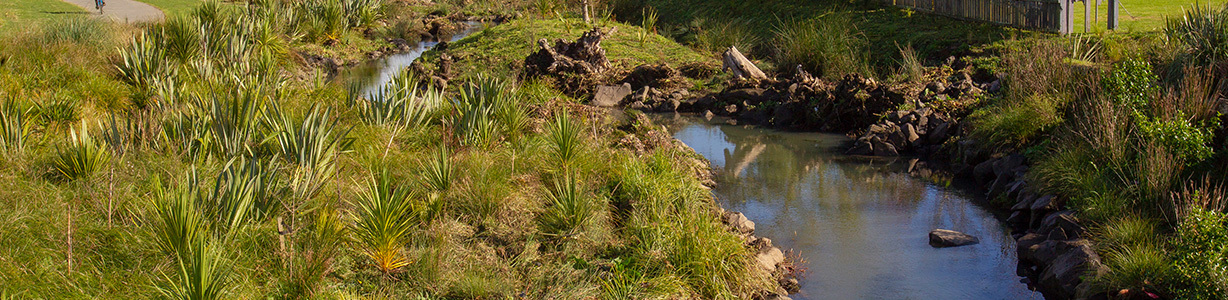
Blue-green networks
As part of the Making Space for Water programme, we identified 12 potential areas around the region that were either hit hard during the 2023 floods or that could most benefit from blue-green networks.
Blue-green networks
As part of the Making Space for Water programme, we identified 12 potential areas around the region that were either hit hard during the 2023 floods or that could most benefit from blue-green networks.
Blue-green networks
As part of the Making Space for Water programme, we identified 12 potential areas around the region that were either hit hard during the 2023 floods or that could most benefit from blue-green networks.
A blue-green network is a system of waterways (blue) and parks (green) that give stormwater space to flow and help reduce flooding where people live.
Find out more →

Climate-friendly urban regeneration
AUDO (Auckland Urban Development Office, formerly Eke Pānuku) leads urban regeneration that puts climate action at its heart – designing neighbourhoods that are low-carbon, connected and ready for the future.
Climate-friendly urban regeneration
AUDO (Auckland Urban Development Office, formerly Eke Pānuku) leads urban regeneration that puts climate action at its heart – designing neighbourhoods that are low-carbon, connected and ready for the future.
Climate-friendly urban regeneration
AUDO (Auckland Urban Development Office, formerly Eke Pānuku) leads urban regeneration that puts climate action at its heart – designing neighbourhoods that are low-carbon, connected and ready for the future.
From re-greening streets to restoring waterways and creating spaces where communities can thrive, AUDO’s work shows how placemaking can also be climate action.
News & Highlights

OUR AUCKLAND
12 Sep 2025
How your targeted rates are improving Auckland’s natural environment and water quality
These targeted rates must be used to protect the environment or our waterways...

OUR AUCKLAND
5 Jun 2025
Auckland Council backs environmental stars with a burst of funding
Grants help to protect and restore native ecosystems, grow community involvement and contribute to Māori outcomes...

OUR AUCKLAND
16 May 2025
Walking together: Council, mana whenua and community deepen conservation relationships online
Protecting the environment in Tāmaki Makaurau is deeply cultural, ancestral and collaborative journey

OUR AUCKLAND
7 Apr 2025
Community nurseries: the green heart of Auckland’s restoration efforts
Auckland’s community nurseries are playing a critical role in restoring the region’s natural environment...

OUR AUCKLAND
11 Nov 2024
Hapū-led partnership launched to protect globally significant ecosystems and endangered species of the Kaipara
The historic agreement was signed at Te Hana Te Ao Marama Marae...

PHOTO ESSAY
Our Urban Ngāhere
How a decade-long project — captured through Anna Delany’s lens — is protecting South Auckland streets...
Read more