
Climate Impacts
Auckland’s climate is changing.
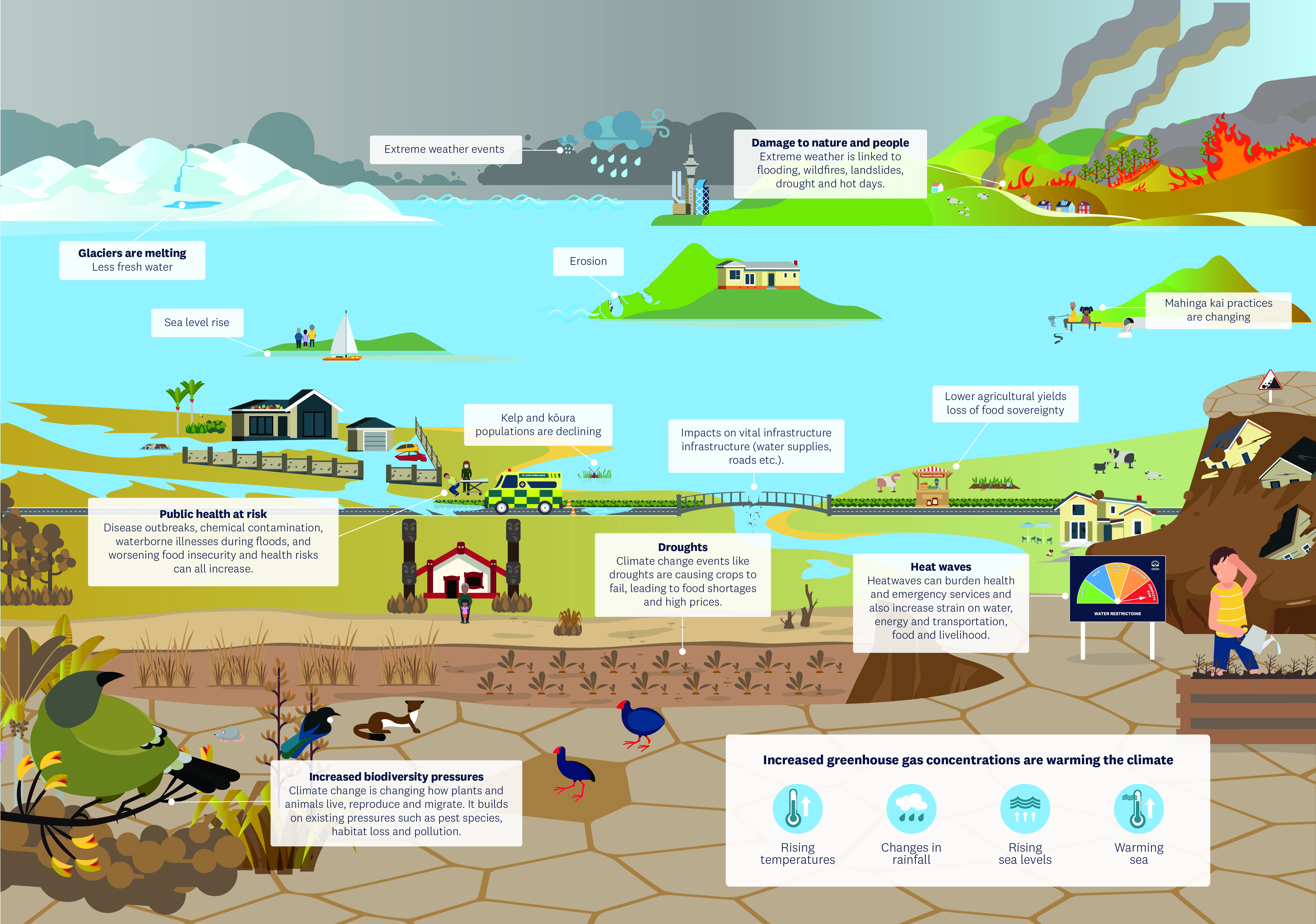
We are already starting to see higher temperatures, increased drought, more intense rainfall events and sea level rise. We expect more change over the next 100 years.
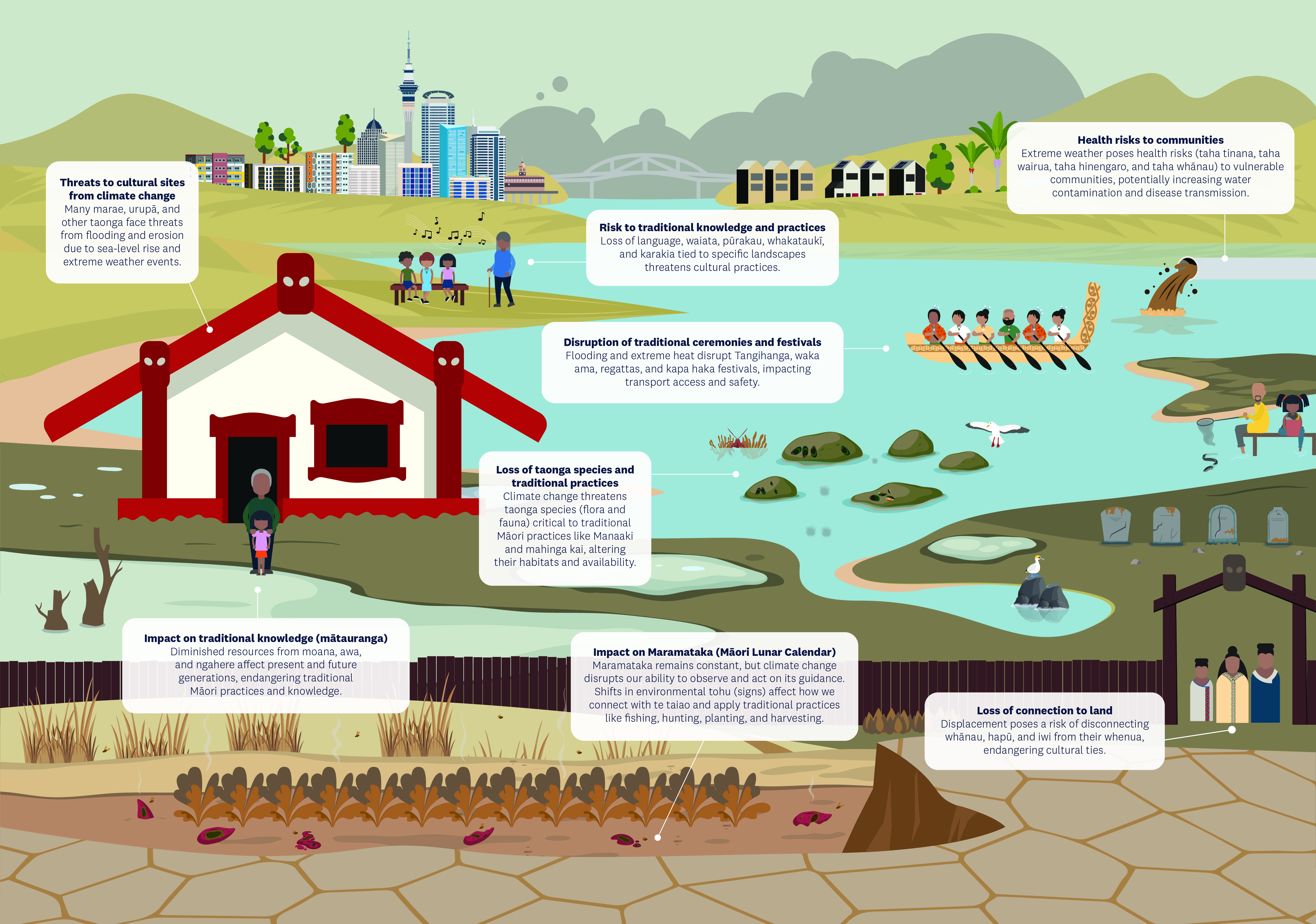
Climate change will impact our communities, infrastructure, economy and natural environment.
This section provides very brief overviews of the key climate hazards and impacts Auckland is preparing for, as well as some resources and tools to help you explore climate impacts in more detail.
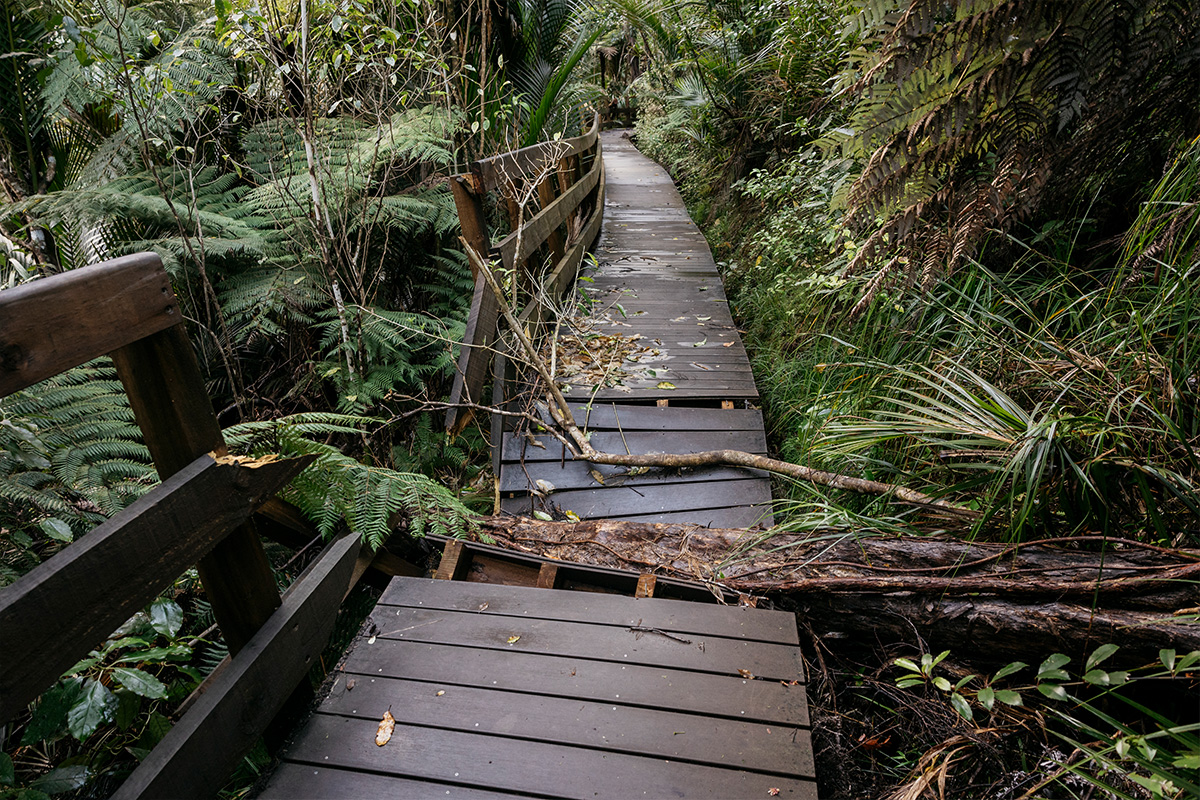
Explore key climate impacts for Tāmaki Makaurau

Floods, landslides & wind
How intense rain, flooding, landslides and strong winds can impact homes and communities.

Rising seas & coastal change
Find out how sea levels are rising, reshaping coastlines and changing our beaches, dunes and estuaries.

Heat, drought & fire
Learn how heatwaves, more hot days and longer dry periods are becoming a bigger part of our lives.

Taiao
How the changing climate is affecting ecosystems and taonga species across Auckland's diverse landscapes.

Wellbeing
Learn how climate change can impact physical health, mental wellbeing and the spiritual resilience people draw on in daily life.
SOME FREQUENTLY ASKED QUESTIONS (FAQs) ABOUT CLIMATE CHANGE
What is climate change?
What is climate change?
As more carbon pollution is created from the way we live, work, play and travel, it traps heat like a blanket, which warms the Earth and disrupts the climate and weather systems.
This imbalance in our climate causes more flooding events, heatwaves and droughts, and other impacts explored in this section.
What is the difference between emissions reduction (climate mitigation) and preparing for a disrupted climate (climate adaptation)?
What is the difference between emissions reduction (climate mitigation) and preparing for a disrupted climate (climate adaptation)?
Emissions reduction means reducing the causes of climate change, like cutting greenhouse gas emissions.
Preparing for a disrupted climate means adjusting to the impacts of climate change, like increasing flood resilience or investing in community-led planning for climate disruption.
The best actions are ones that achieve both goals at once: helping us manage floods (the way trees and wetlands do) and cut emissions while also making our communities safer. Auckland Council is delivering a comprehensive programme of work that spans all key areas of climate action, including both emissions reduction and preparing for a disrupted climate.
We need to be careful about investing in solutions that may make things worse down the track. For example, hard protection measures like seawalls can create a false sense of security, can shift the problem further down the coast, and also require considerable maintenance over time.
With you, we can plan for climate disruption together in ways that also reduce levels of carbon pollution in the atmosphere. Planning and prevention at the same time is how we stop climate disruption getting worse.
Is climate adaptation the same as preparing for emergencies?
Is climate adaptation the same as preparing for emergencies?
Adaptation goes beyond preparing for and responding to emergencies. Adaptation is a holistic and ongoing process involving policies and planning, tools, information and actions to respond to climate disruption, so people can also thrive between events.
How fast do we need to plan for climate disruption events?
How fast do we need to plan for climate disruption events?
While it might seem scary, we often use “high intensity” scenarios as planning tools - because they provide us with the most security and help us plan for extremes, which are harder to predict than slow changes over long periods of time.
Even “mild” or “best-case” climate scenarios suggest that the sooner we act, the easier and more affordable it will be to maintain the lives and places we cherish.
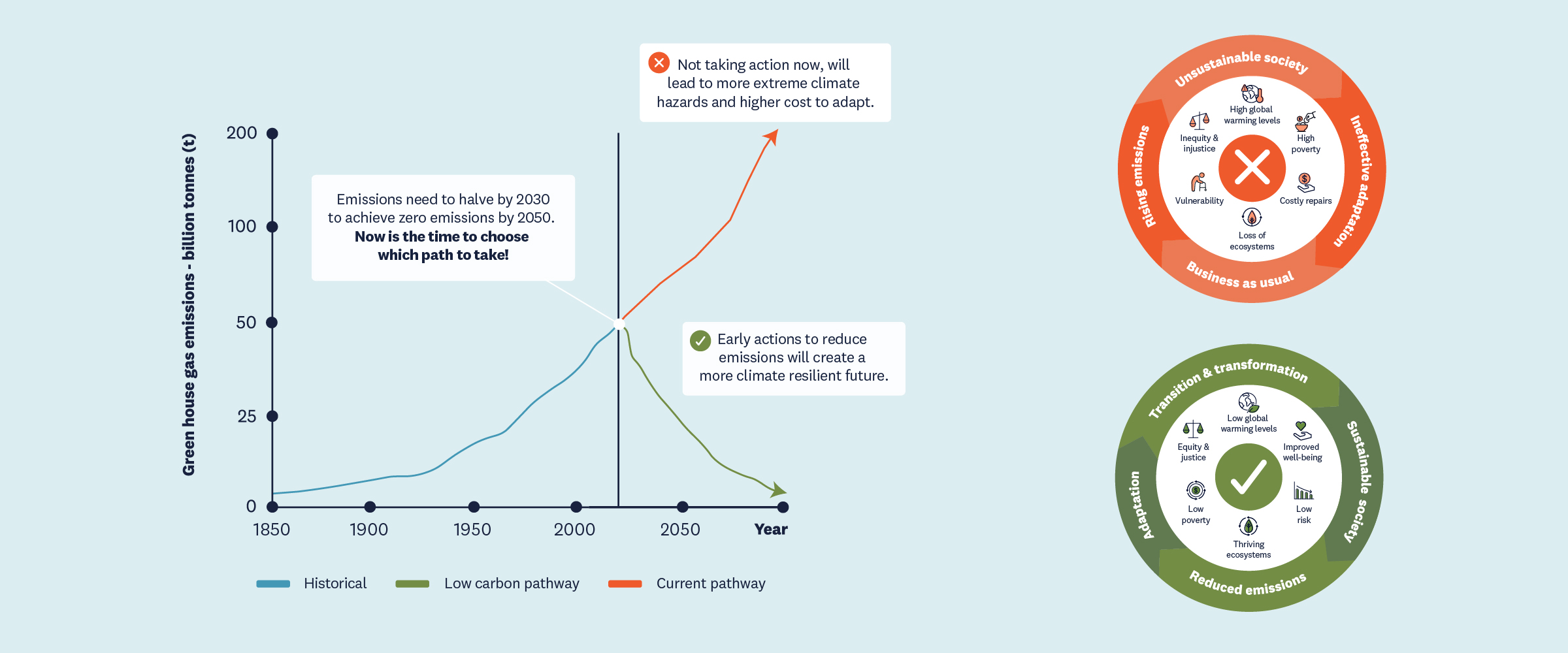
We are preparing sensibly and responsibly for a disrupted climate by investing in long-term solutions that prevent further harm to our communities, while improving our lives now.
What do all the climate change words mean?
What do all the climate change words mean?
When you start talking about climate change and climate adaptation, you’ll hear a lot of terms and abbreviations.
Here’s a brief explanation of some common climate change language.
People often use these words in slightly different ways. And sometimes the words we use in everyday conversation don’t match the exact definitions scientists use. Although these words are common, they’re just one small piece of the puzzle. Understanding them can help, but they’re far from the most important part of taking action.

FEATURE STORY
Chill tactics
Ten top tips to keep cool through Auckland's changing heat
Chill tactics