IN THE KITCHEN
For many of us, our kitchens are the hearts of our homes. We want to make sure our kitchens nourish our families and the environment. From thinking about our kai more carefully to shopping local and reducing “food miles”, small changes can grow healthy communities and save us real money on our food bills.
Auckland Council is taking a big-picture approach to food, focusing on cutting waste, tackling methane from what’s left over, and supporting local growers and producers to reduce “food miles”. From supporting food rescue to turning scraps into clean energy, we want to help families, communities and the climate all at once.


Reduce food waste
Reducing food waste is an easy way households can take climate action. When food ends up in landfills, it rots and releases methane - a powerful greenhouse gas.
Reduce food waste
Reducing food waste is an easy way households can take climate action. When food ends up in landfills, it rots and releases methane - a powerful greenhouse gas.
Reduce food waste
Reducing food waste is an easy way households can take climate action. When food ends up in landfills, it rots and releases methane - a powerful greenhouse gas.
Across New Zealand, families could keep an average of three shopping trolleys of food a year out of landfill, and save an average of $1,300 by doing so! Simple steps like planning meals, storing food properly, making the most of leftovers and composting can help.
See in the garden →
Reducing food waste puts money back in your pocket and reduces harmful greenhouse gases. It also helps conserve the resources - water, land and energy - used to produce the food in the first place.

Buy local and seasonal – eat sustainably
Auckland is surrounded by a productive “food bowl,” but the city is increasingly reliant on food transported from further afield. Choosing locally grown food supports a more self-sufficient local food system for our city.
Buy local and seasonal – eat sustainably
Auckland is surrounded by a productive “food bowl,” but the city is increasingly reliant on food transported from further afield. Choosing locally grown food supports a more self-sufficient local food system for our city.
Buy local and seasonal – eat sustainably
Auckland is surrounded by a productive “food bowl,” but the city is increasingly reliant on food transported from further afield. Choosing locally grown food supports a more self-sufficient local food system for our city.
Supporting local growers also helps protect valuable agricultural land from urban sprawl, as well as reducing food miles.
Auckland has a vibrant network of farmers' markets, providing a direct connection between you and the people who grew your food.
Our food choices also support changes in our food systems and can encourage regenerative farming, helping food producers grow a wider variety of crops (such as drought- and flood-resistant plants, legumes, cereals, nuts and seeds). These system changes can help us become more self-sufficient, reduce emissions and increase resilience to climate change

Plastic, not so fantastic
Unnecessary plastic challenges our core values around human and environmental health and wellbeing. Plastic pollutes our oceans and waterways, and even our bodies, threatens wildlife and takes hundreds of years to break down.
Plastic, not so fantastic
Unnecessary plastic challenges our core values around human and environmental health and wellbeing. Plastic pollutes our oceans and waterways, and even our bodies, threatens wildlife and takes hundreds of years to break down.
Plastic, not so fantastic
Unnecessary plastic challenges our core values around human and environmental health and wellbeing. Plastic pollutes our oceans and waterways, and even our bodies, threatens wildlife and takes hundreds of years to break down.
The demand for plastic is increasing, which keeps the demand for oil and gas high.
The good news is, there are ways to cut plastic down, from choosing products with little or compostable packaging, to buying pantry basics in bulk from refill or zero-waste stores.
TOOLS AND RESOURCES


What Auckland Council is doing to deal with waste
Making biofuel from food scraps
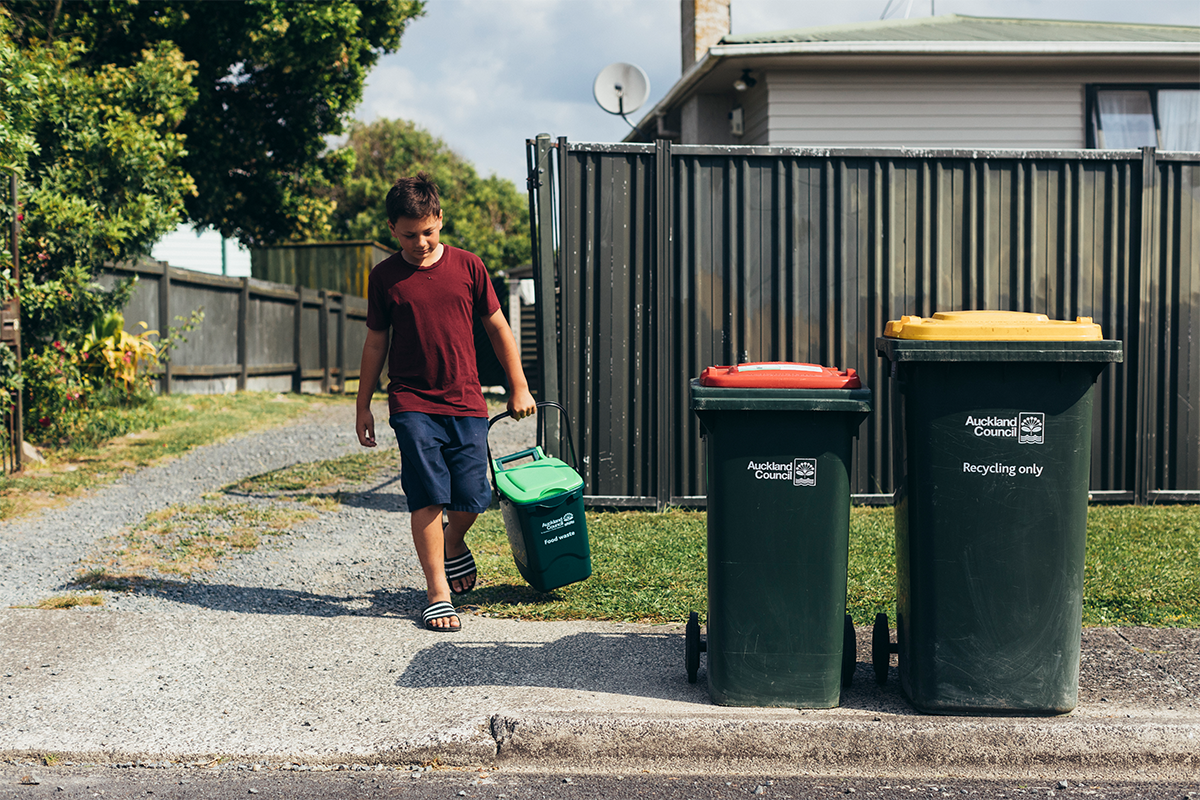
Auckland Council is tackling food waste and methane head-on by rolling out our regionwide food scraps collection. Your food scraps are sent to the EcoGas facility in Reporoa, which turns organic waste into biofuel and feeds surplus energy into the national gas grid. What’s left becomes liquid fertiliser to grow tomatoes!
Community food rescue and redistribution
We’re also funding community food rescue and redistribution initiatives and backing education programmes like Love Food Hate Waste.
Reducing plastic use
In 2025 we said goodbye to single use cups at all our council cafés. We now serve hot drinks in reusable cups, including at our self-service coffee machines. That equals over 3,500 cups a week that would have gone to landfill.