

IN THE GARDEN
Your backyard can protect your home, support wildlife and help our city thrive.
From planting trees that keep our streets cooler to capturing rainwater that prevents flooding, your garden can be part of Auckland’s natural defence system. The choices you make – from what you plant to how you care for your soil – can lock carbon in the ground, create shelter and food for native birds and insects, and make your home more resilient to storms, droughts and heatwaves.

 Manage stormwater image">
Manage stormwater
Auckland’s heavier downpours can overwhelm our stormwater system, causing flooding in streets and homes. Keep water flowing and out of the drains and reduce the risk of flooding on your street.
Manage stormwater image">
Manage stormwater
Auckland’s heavier downpours can overwhelm our stormwater system, causing flooding in streets and homes. Keep water flowing and out of the drains and reduce the risk of flooding on your street.
Manage stormwater
Auckland’s heavier downpours can overwhelm our stormwater system, causing flooding in streets and homes. Keep water flowing and out of the drains and reduce the risk of flooding on your street.
You can help by letting flood water flow freely and safely to the drains:
- Keep gutters and drains clear of leaves and rubbish.
- Keep overland flood paths (often roads) clear - include a gap beneath your fence or build a fence with gaps between vertical slats, so water drains through.
- Avoid planting near underground water pipes as roots may damage them.
- Avoid placing items like planters, BBQs and rubbish in low areas that could be washed away by flood water.
 Install a rainwater tank image">
Install a rainwater tank
Rainwater is a valuable resource. By investing in a simple rainwater tank, you can actively reduce your water use, help manage local stormwater runoff, and contribute to your home's overall resilience against climate extremes.
Install a rainwater tank image">
Install a rainwater tank
Rainwater is a valuable resource. By investing in a simple rainwater tank, you can actively reduce your water use, help manage local stormwater runoff, and contribute to your home's overall resilience against climate extremes.
Install a rainwater tank
Rainwater is a valuable resource. By investing in a simple rainwater tank, you can actively reduce your water use, help manage local stormwater runoff, and contribute to your home's overall resilience against climate extremes.
Rainwater tanks are the ultimate climate trifecta.
They can help you:
1.
save money on your water bill
2.
save your streets from flooding
3.
save water to use during drought
A simple rain tank for garden watering is around $200, while more complex systems can range upward from $3,000.
Watch: How to choose a rainwater tank →

Create a climate-resilient garden birds will love
Built to handle both rain and drought. Your garden can be a vital part of Auckland’s green infrastructure — soaking up stormwater to prevent flooding, storing carbon, and providing food and shelter for native birds, lizards, and insects. A small rain garden might only take you a few hours and cost a few hundred dollars. If you want a bigger garden, or to get a gardener to help, it could cost a few thousand dollars.
Create a climate-resilient garden birds will love
Built to handle both rain and drought. Your garden can be a vital part of Auckland’s green infrastructure — soaking up stormwater to prevent flooding, storing carbon, and providing food and shelter for native birds, lizards, and insects. A small rain garden might only take you a few hours and cost a few hundred dollars. If you want a bigger garden, or to get a gardener to help, it could cost a few thousand dollars.
Create a climate-resilient garden birds will love
Built to handle both rain and drought. Your garden can be a vital part of Auckland’s green infrastructure — soaking up stormwater to prevent flooding, storing carbon, and providing food and shelter for native birds, lizards, and insects. A small rain garden might only take you a few hours and cost a few hundred dollars. If you want a bigger garden, or to get a gardener to help, it could cost a few thousand dollars.
Important takeaways for building a rain garden
There’s a lot of advice online about how to build rain gardens, but important takeaways include:
Remove hard surfaces like concrete or pavers and replace with absorbent materials such as soil, gravel, or pebbles
Plant water-loving natives with long roots, like harakeke, carex, oioi, and toetoe, which can withstand both ponding and drought
Include a variety of native species that flower and fruit at different times of the year (kōwhai, harakeke, coprosma) to support birds and lizards year-round
Use mulch (bark chips, pea straw) to retain soil moisture — it can reduce evaporation by up to 75%
Redirect your roof downpipe into your rain garden instead of the stormwater drain

Grow a home food garden
Grow your own fresh, healthy kai and reduce your environmental footprint. Growing your own food means zero “food miles,” no plastic packaging and better tasting produce. It helps reduce grocery bills, decreases food waste by harvesting only what you need, and strengthens household food security.
Grow a home food garden
Grow your own fresh, healthy kai and reduce your environmental footprint. Growing your own food means zero “food miles,” no plastic packaging and better tasting produce. It helps reduce grocery bills, decreases food waste by harvesting only what you need, and strengthens household food security.
Grow a home food garden
Grow your own fresh, healthy kai and reduce your environmental footprint. Growing your own food means zero “food miles,” no plastic packaging and better tasting produce. It helps reduce grocery bills, decreases food waste by harvesting only what you need, and strengthens household food security.
Here are our top tips
Don't know where to start? Focus on these practical, small steps for immediate success and enjoyment in growing your own fresh kai.
Start small
Grow a few herbs or salad greens on a windowsill or balcony. Plants in pots need more water and weekly feeding (try seaweed extract).
Choose easy-to-grow plants
Lettuce, spinach, radishes, and beans all thrive in Auckland’s climate.
Feed your soil
Add compost and mulch to your garden beds to improve soil health and moisture retention.
Learn and connect
Visit a local community garden or take a workshop for advice and inspiration.

Compost food and garden waste
Composting is one of the single most powerful climate actions you can take right in your own home. It transforms kitchen and garden scraps into ‘black gold’ – a nutrient-rich material that dramatically improves your soil, helping plants thrive while keeping harmful methane-producing waste out of our landfills.
Compost food and garden waste
Composting is one of the single most powerful climate actions you can take right in your own home. It transforms kitchen and garden scraps into ‘black gold’ – a nutrient-rich material that dramatically improves your soil, helping plants thrive while keeping harmful methane-producing waste out of our landfills.
Compost food and garden waste
Composting is one of the single most powerful climate actions you can take right in your own home. It transforms kitchen and garden scraps into ‘black gold’ – a nutrient-rich material that dramatically improves your soil, helping plants thrive while keeping harmful methane-producing waste out of our landfills.

Turn your kitchen and garden scraps into “black gold” and improve your soil
Nearly half of Auckland household waste sent to landfill could be composted instead. Food waste rotting in landfills produces methane, a powerful greenhouse gas. Composting avoids this and creates nutrient-rich material that improves soil health, water retention, and plant growth — reducing the need for chemical fertilisers.
Turn your kitchen and garden scraps into “black gold” and improve your soil
Nearly half of Auckland household waste sent to landfill could be composted instead. Food waste rotting in landfills produces methane, a powerful greenhouse gas. Composting avoids this and creates nutrient-rich material that improves soil health, water retention, and plant growth — reducing the need for chemical fertilisers.
Turn your kitchen and garden scraps into “black gold” and improve your soil
Nearly half of Auckland household waste sent to landfill could be composted instead. Food waste rotting in landfills produces methane, a powerful greenhouse gas. Composting avoids this and creates nutrient-rich material that improves soil health, water retention, and plant growth — reducing the need for chemical fertilisers.

Food waste facts!
Understanding the scale of food waste is the first step! Discover why cutting down on food scraps makes a huge difference for your wallet and the climate.
Food waste facts!
Understanding the scale of food waste is the first step! Discover why cutting down on food scraps makes a huge difference for your wallet and the climate.
Food waste facts!
Understanding the scale of food waste is the first step! Discover why cutting down on food scraps makes a huge difference for your wallet and the climate.
- ► Wasted food costs the average NZ household $1,326 per year.
- ► The average New Zealand family throws away three shopping trolleys of edible food each year.
- ► About half of the waste Auckland households send to landfill could be composted.
- ► Food waste in landfill causes 4% of New Zealand's total greenhouse gas emissions.
On the other hand, composting at home keeps organic waste out of landfill and cuts methane emissions dramatically. Plus, adding compost improves soil health, making gardens more resilient to drought and less reliant on emissions-intensive fertilisers.
Two effective climate actions you can take
1.
Reduce food waste: see in the kitchen →
2.
Compost your food scraps - all of them, including meat and dairy

How to compost — it’s easier than you think!
Composting at home is an aerobic (oxygen-using) process that doesn’t produce methane like landfills do. Instead, it breaks down food and garden scraps into rich, valuable compost that benefits your garden.
How to compost — it’s easier than you think!
Composting at home is an aerobic (oxygen-using) process that doesn’t produce methane like landfills do. Instead, it breaks down food and garden scraps into rich, valuable compost that benefits your garden.
How to compost — it’s easier than you think!
Composting at home is an aerobic (oxygen-using) process that doesn’t produce methane like landfills do. Instead, it breaks down food and garden scraps into rich, valuable compost that benefits your garden.

Follow composting basics
Balance “greens” (food scraps, fresh garden clippings) and “browns” (dry leaves, cardboard), keep your pile moist, and turn it regularly for airflow.
Follow composting basics
Balance “greens” (food scraps, fresh garden clippings) and “browns” (dry leaves, cardboard), keep your pile moist, and turn it regularly for airflow.
Follow composting basics
Balance “greens” (food scraps, fresh garden clippings) and “browns” (dry leaves, cardboard), keep your pile moist, and turn it regularly for airflow.

Choose the system for you
There are composting options for you no matter how or where you live. Find the best composting fit:
Choose the system for you
There are composting options for you no matter how or where you live. Find the best composting fit:
Choose the system for you
There are composting options for you no matter how or where you live. Find the best composting fit:
►
If you have a backyard, use a large compost bin.
►
People with smaller outdoor spaces like balconies can try worm farms (fun).
►
If you live in an apartment, use a Bokashi bin to compost all food scraps (including meat and dairy) indoors.
►
If you don't have space to compost, use the ShareWaste app to connect with a neighbour who has a compost bin and wants your scraps.
If none of these work for you, try our kerbside food scraps collection →.

Kerbside food scraps collection
Give us your rukenga kai (food scraps) and we’ll turn them into clean energy and liquid fertiliser to grow more kai.
Kerbside food scraps collection
Give us your rukenga kai (food scraps) and we’ll turn them into clean energy and liquid fertiliser to grow more kai.
Kerbside food scraps collection
Give us your rukenga kai (food scraps) and we’ll turn them into clean energy and liquid fertiliser to grow more kai.
Since we started doing this, we’ve cut Auckland’s contribution of edible food to landfills by a third (from around 100,000 tonnes to less than 70,000 tonnes). Tau kē Tāmaki!
Just put your food scraps into the bin and we’ll collect them on your weekly council collection day – for free.
Spotlight on
Fonua mahu mei Langi
A thriving Tongan gardening programme in east, south and west Auckland supports locals to install small garden boxes in their backyards. The inspiration came from Pacific Vision Aotearoa with support from Me’a’ofa Fungani Methodist Church in Panmure.
The programme is being trialed with church communities through a train the trainer model, and shares knowledge about growing and harvesting a good selection of fruit and vegetables for families to share among their community.
Watch: The Fonua Mahu mei Langi Story →
TOOLS AND RESOURCES


What Is Auckland Council is doing

Local and regional parks
Local and regional parks in Auckland play a crucial role in building climate resilience. The city's parks network spans over 100,000 hectares of open space, biodiverse habitat, and infrastructure (like playgrounds!) that supports both people and nature.
Local and regional parks
Local and regional parks in Auckland play a crucial role in building climate resilience. The city's parks network spans over 100,000 hectares of open space, biodiverse habitat, and infrastructure (like playgrounds!) that supports both people and nature.
Local and regional parks
Local and regional parks in Auckland play a crucial role in building climate resilience. The city's parks network spans over 100,000 hectares of open space, biodiverse habitat, and infrastructure (like playgrounds!) that supports both people and nature.
Regional parks, including the Hunua and Waitākere Ranges, are important ecosystems that supply clean drinking water and support native biodiversity. These areas anchor natural resource protection and underpin our climate adaptation strategies. Parks serve as “green infrastructure”. Natural features capture and slow stormwater runoff, buffer flooding during extreme rain, and reduce urban heat, helping communities cope with a changing climate.
Climate change is also causing increased wildfire risks. We reduce these risks by removing flammable invasive species and maintaining healthy native vegetation to slow the spread of fire.

Urban Ngāhere
Auckland Council’s Urban Ngāhere programme aims to increase the city’s urban tree canopy to 30% overall and at least 15% in every local board area by 2050, guided by the pillars of Knowing, Growing and Protecting.
Urban Ngāhere
Auckland Council’s Urban Ngāhere programme aims to increase the city’s urban tree canopy to 30% overall and at least 15% in every local board area by 2050, guided by the pillars of Knowing, Growing and Protecting.
Urban Ngāhere
Auckland Council’s Urban Ngāhere programme aims to increase the city’s urban tree canopy to 30% overall and at least 15% in every local board area by 2050, guided by the pillars of Knowing, Growing and Protecting.
The programme combats urban heat and reduces flooding risks by cooling neighborhoods and improving stormwater management, while also strengthening nurseries, planting partnerships, regulatory tools, data and public education.
Working closely with mana whenua, community groups, schools and volunteers, including the Tūpuna Maunga Authority, the council supports native plant propagation and restoration across the city. In 2023 alone, these efforts resulted in roughly 750,000 trees planted over 18 hectares, demonstrating a strong community-driven approach.
Tree planting is growing our urban ngāhere, boosting canopy cover that provides habitat for native wildlife and strengthens our connection to nature – supporting healthier more resilient communities.
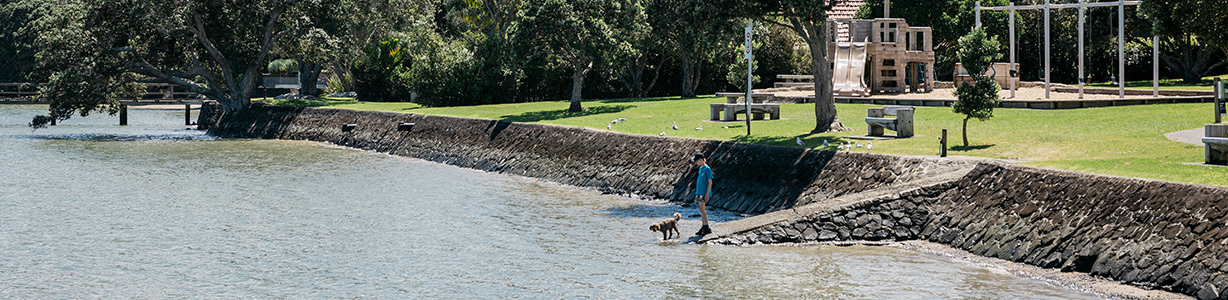
Making Space for Water
Our Making Space for Water programme is a $760 million, 10‑year flood resilience programme, launched in 2024 in response to the extreme weather events of early 2023. It's part of the Tāmaki Makaurau Recovery Plan and is co‑funded by central government.
Making Space for Water
Our Making Space for Water programme is a $760 million, 10‑year flood resilience programme, launched in 2024 in response to the extreme weather events of early 2023. It's part of the Tāmaki Makaurau Recovery Plan and is co‑funded by central government.
Making Space for Water
Our Making Space for Water programme is a $760 million, 10‑year flood resilience programme, launched in 2024 in response to the extreme weather events of early 2023. It's part of the Tāmaki Makaurau Recovery Plan and is co‑funded by central government.
Our Making Space for Water programme is an $820 million, 10‑year flood resilience programme, launched in 2024 in response to the extreme weather events of early 2023. It's part of the Tāmaki Makaurau Recovery Plan and is co‑funded by central government.
The programme prepares for floods and reduces flood risks by making space for water to move safely through neighbourhoods. It includes core initiatives:
- blue‑green projects (see below)
- significant investment in stormwater infrastructure
- increased stormwater maintenance
- stream and waterway resilience
- community, and site-specific solutions to manage flood risks
- flood intelligence tools (like the Auckland Flood Viewer).
Major infrastructure upgrades are now underway.
You can also check out some big Making Space for Water flood resilience projects here:

PHOTO ESSAY
Urban Ngāhere COMING SOON
How a decade-long project — captured through Anna Delany’s lens — is protecting South Auckland streets...
Read more